How I market my apps as a one-person team, with Claude as my marketing department
I build and market close to ten apps on my own. Here is the whole system: real numbers from Search Console, research in Ahrefs, product sites in Ectobuilder, store listings, email in Resend, payments in Polar, and Claude wiring it together.

Michal Wlosik
· 4 min read
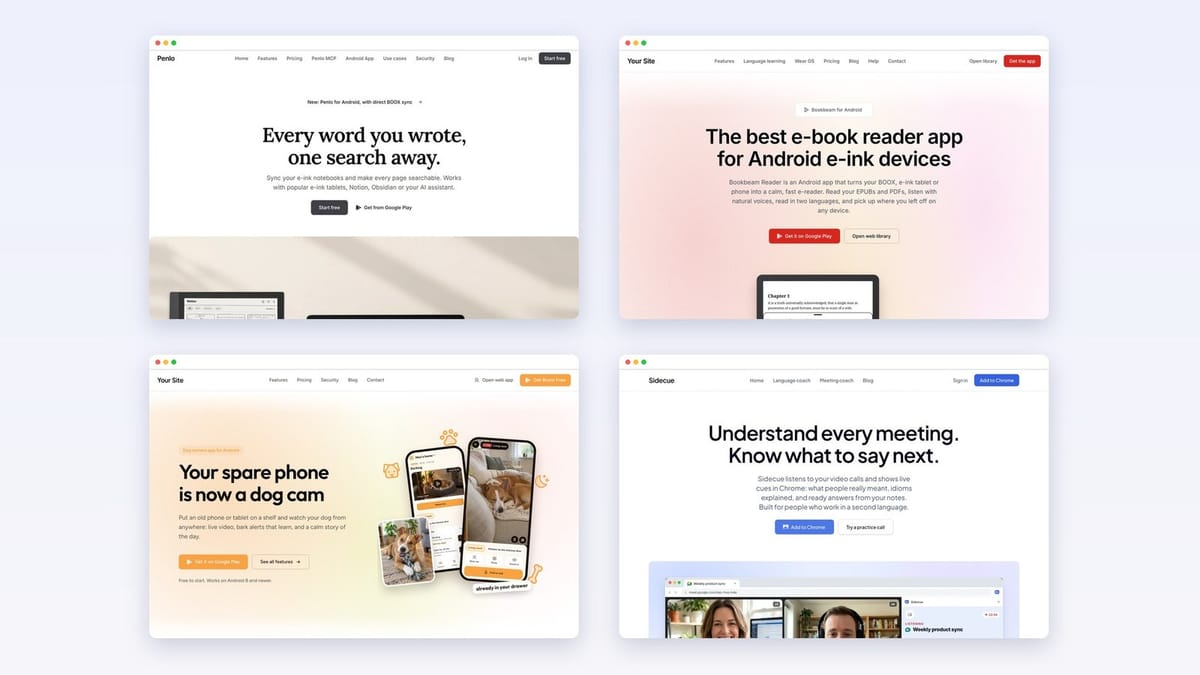
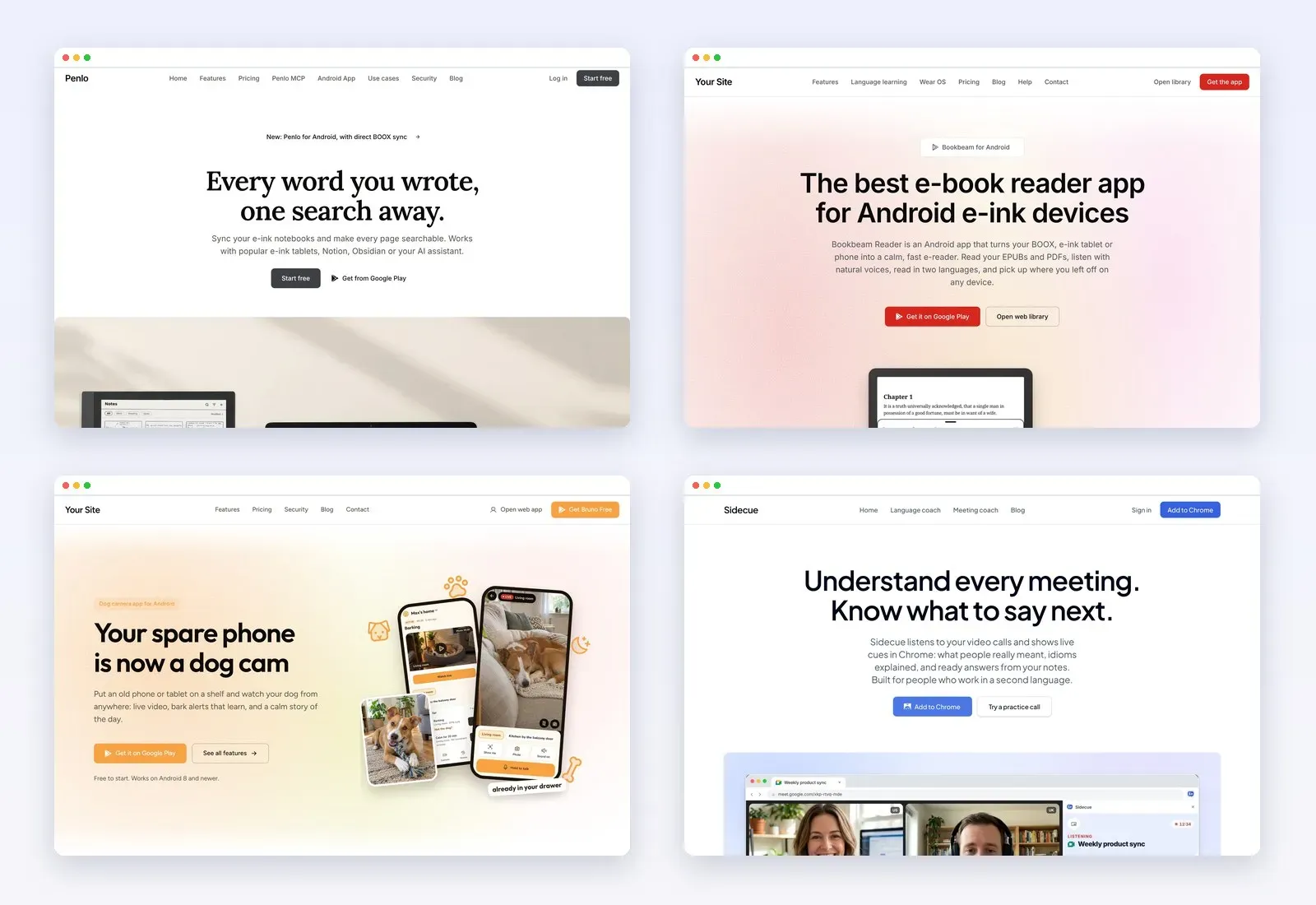
I build apps on my own: Penlo, Bookbeam, Sidecue, Bruno, Sift, Cubbie, Ectobuilder and a few smaller ones. In my 2026 lessons post I wrote that marketing is the job now. Building is cheap, and attention is not. This post is the practical side of that sentence: what my marketing actually looks like when there is no team, and how much of it Claude does.
The short version: Claude is connected to the tools I use, so it reads the data, does the legwork and drafts the work, and I make the calls. It doesn't replace judgment. It replaces the hours of clicking between dashboards that used to stop me from doing marketing at all.
First, the honest numbers
This isn't a success story yet. My apps together are still under $1,000 in monthly recurring revenue. Search is where things are starting to move. Here is what Google Search Console shows for my sites over the 28 days from 25 October to 21 November 2026:
| Site | Clicks | Impressions | Avg. position |
|---|---|---|---|
| lessonpills.com | 454 | 6,791 | 14.5 |
| penlo.app | 308 | 18,634 | 8.9 |
| michalwlosik.com | 100 | 3,298 | 7.6 |
| sidecue.app | 90 | 347 | 4.9 |
| bookbeam.tools | 76 | 4,012 | 10.2 |
| ectobuilder.com | 29 | 2,622 | 34.1 |
| siftphotos.pro | 17 | 7,431 | 10.5 |
| cubbie.pro | 2 | 152 | 8.2 |
| brunocam.com | 1 | 399 | 21.4 |
Small numbers, but real ones, and growing. Penlo's blog guides took it from about 900 impressions a month in September to 16,510 in the first three weeks of November. A lesson on the side: Ahrefs estimated penlo.app at 9 visits a month, while Search Console counted 308 clicks in 28 days. Third-party tools are good for sizing topics and checking competitors, but for your own site, trust your own data. The system below matters because I can't afford to spend my days on any single channel, so each one has to run with as little of my time as possible.
The loop
Every product goes through the same loop. Each step has its own write-up:
- Research. Find what people search for and ask AI assistants, and where the gaps are. How I use Search Console, Ahrefs and Claude for SEO and AI search.
- A home for the product. A product site and a blog, built in an afternoon. How I launch product sites with Ectobuilder.
- The stores. Listings, screenshots, releases and reviews on the Chrome Web Store and Google Play. Store listings and reviews.
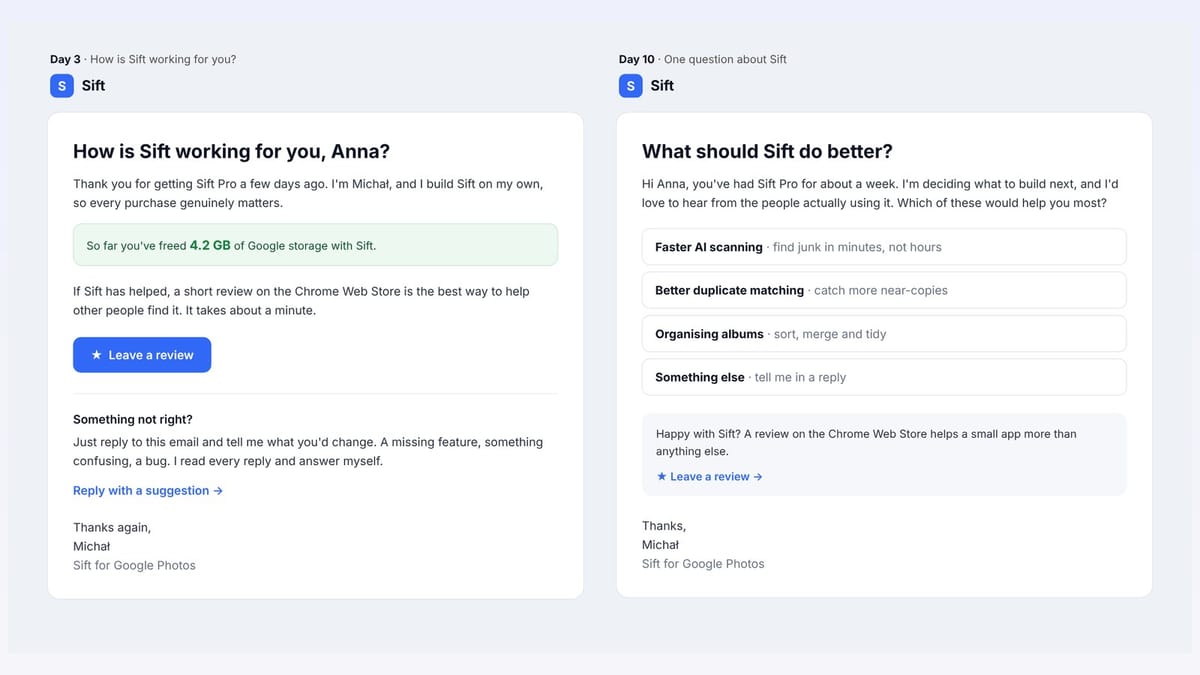
- Email. Onboarding, opt-in product news and review requests. How I use email automation with Resend.
- Payments. Who sells to the customer, and why it matters for a one-person company. Why I sell through Polar.
- The plumbing. How Claude reaches all these accounts without ever seeing a password. Why I use Composio and Zernio.
What Claude actually does
"AI does my marketing" is vague, so here is the concrete list. Claude is connected to these tools, and each line is something it did for me in the last few weeks:
- Google Search Console: pulls real clicks, impressions, top queries and pages for every product site, through Composio.
- Ahrefs: pulls keyword volumes and difficulty, so a content plan starts from numbers rather than guesses.
- Ectobuilder: edits sections on my product sites, takes screenshots to check them, writes blog drafts straight into Ghost and fills in tag pages. This blog's Projects page was built that way.
- Supabase: reads my own product data. A funnel check on Penlo showed a sharp drop between connecting a sync source and the first synced notebook. That's a bug to fix before any marketing spend, not a marketing problem.
- Stripe and Polar: reads sales and payouts. One check on Sidecue showed that about 700 people were on the free in-app trial, while only about two dozen had started a card trial at checkout in two weeks. That reframed the question from "how do I get sign-ups" to "why don't trial users reach checkout".
- Store Publisher (my own tool): builds and publishes Chrome extension and Android releases, reads Google Play reviews and replies to them.
- Resend: sends branded sign-in emails, post-purchase review requests and forwards every product inbox to my Gmail.
- Zernio: schedules social posts, mostly for Lessonpills and LinkedIn.
I still decide what to build, what to say and what to publish. Claude never presses Publish on this blog; everything it writes lands as a draft, this post included.
What works, and what doesn't
What works: communities. E-ink owners on r/onyxboox, r/RemarkableTablet and r/Supernote found Penlo and Bookbeam, and told me what to build. I wrote about that in how I market Penlo. The rule I follow there: answer the question that was asked, mention other good apps too, say plainly that I'm the developer, and leave the link out unless someone asks.
What works: asking at the right moment. A review request after five real reading sessions in Bookbeam, or three days after someone buys Sift, gets a better response than a pop-up on day one.
What's starting to work: search. Penlo's comparison guides now bring in more clicks than its homepage; the reMarkable alternatives guide alone got 84 clicks in 28 days. It took months of steady writing before anything moved, and most of my sites are still at the start of that curve.
What doesn't work: too many products. Every new app splits the same few hours. The system makes each product cheaper to market, but it doesn't make the hours infinite. That's lesson 20 in the lessons post, and I'm still learning it.
If you want to copy this
- Connect your AI assistant to the tools where your data already lives before you ask it for marketing ideas. Advice without your numbers is generic.
- Fix the funnel before you buy traffic. Claude found my Penlo drop in minutes; I'd never have spotted it in a dashboard I didn't open.
- Automate the boring, repeatable parts (review emails, inbox forwarding, release uploads) and keep the judgment calls for yourself.
- Keep everything as drafts until you've read it. AI is fast, and it is confidently wrong often enough that skipping the read costs you.
The six posts linked above go into each part in detail.
Written by
Builder, product marketer and AI enthusiast. I ship my own apps, like Sift (siftphotos.pro), Penlo (penlo.app), Ectobuilder (ectobuilder.com) and Cubbie (cubbie.pro), and write about building and marketing them with AI.
Keep reading
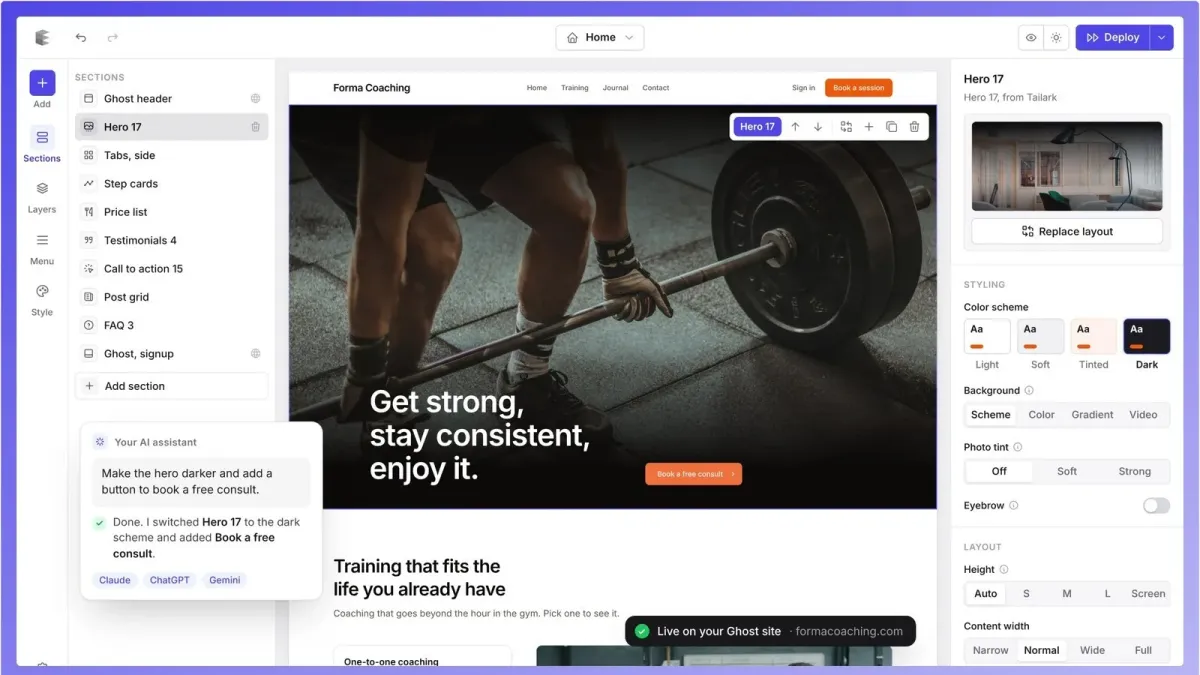
How I launch a product site and blog in an afternoon with Ectobuilder
Every product I ship gets its own site and blog on Ghost, designed in Ectobuilder. Here's the setup, and how Claude edits, screenshots and writes for those sites through Ectobuilder's connector.
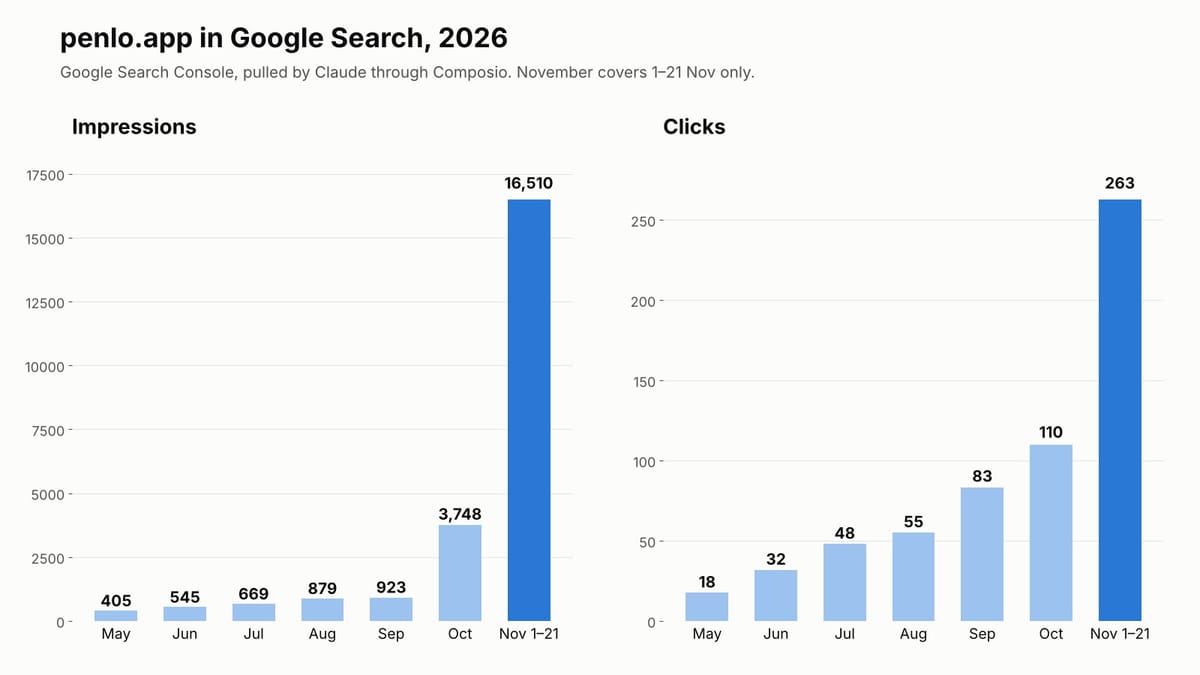
How I use Search Console, Ahrefs and Claude to plan content for Google and AI search
Claude reads Search Console for what's actually working and Ahrefs for what's worth writing next. Here's the loop I use to plan content for Google and for AI assistants, with real data from Penlo.
How I use email automation to onboard users and ask for reviews, with Resend
Branded sign-in emails, opt-in product news, and post-purchase emails that ask for a review on day 3 and for feedback on day 10. Here's how the email side of my apps runs on Resend, Supabase and scheduled Claude tasks.