How I use Search Console, Ahrefs and Claude to plan content for Google and AI search
Claude reads Search Console for what's actually working and Ahrefs for what's worth writing next. Here's the loop I use to plan content for Google and for AI assistants, with real data from Penlo.

Michal Wlosik
· 4 min read
Part of how I market my apps as a one-person team.
Every product blog I run starts the same way: before anyone writes a word, Claude pulls the data. Google Search Console (through Composio) shows what's actually happening on my sites. Ahrefs (through its own MCP connector) shows what's worth writing next. I used to skip this because it meant an hour of exporting CSVs. Now it's one question in a chat, so it actually happens.
Step 1: Check what's actually working
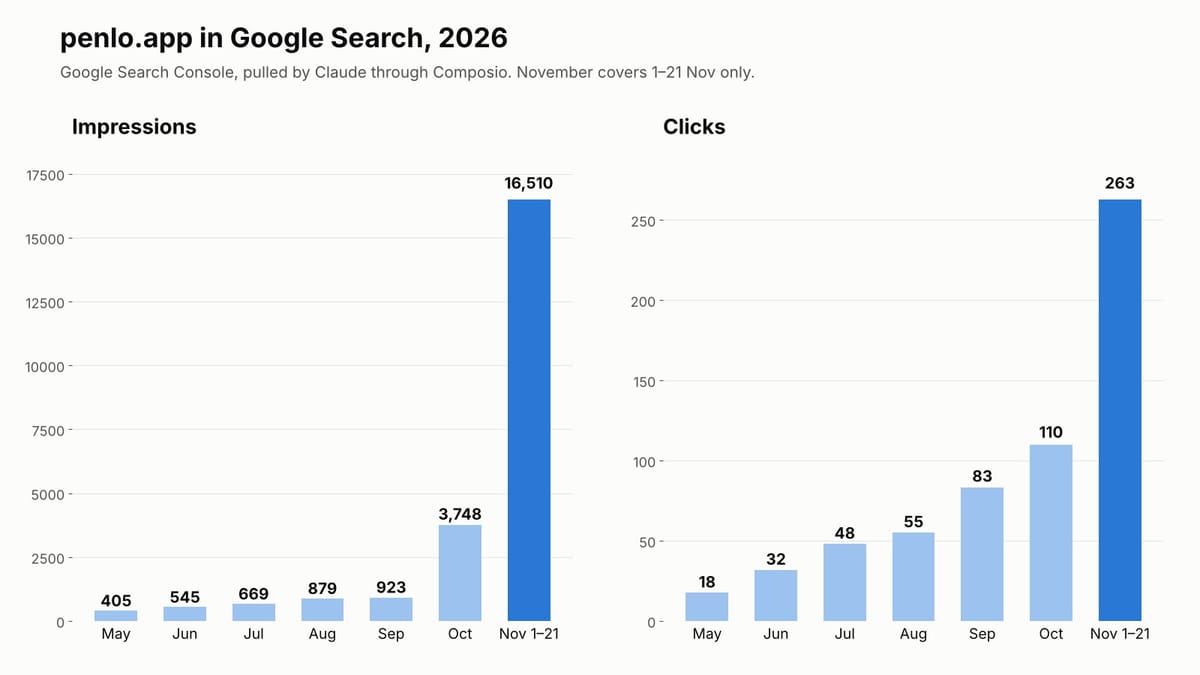
The first question is always "where am I now?", and the answer comes from Search Console, not from a third-party estimate. For penlo.app, the 28 days to 21 November looked like this: 308 clicks, 18,634 impressions and an average position of 8.9.
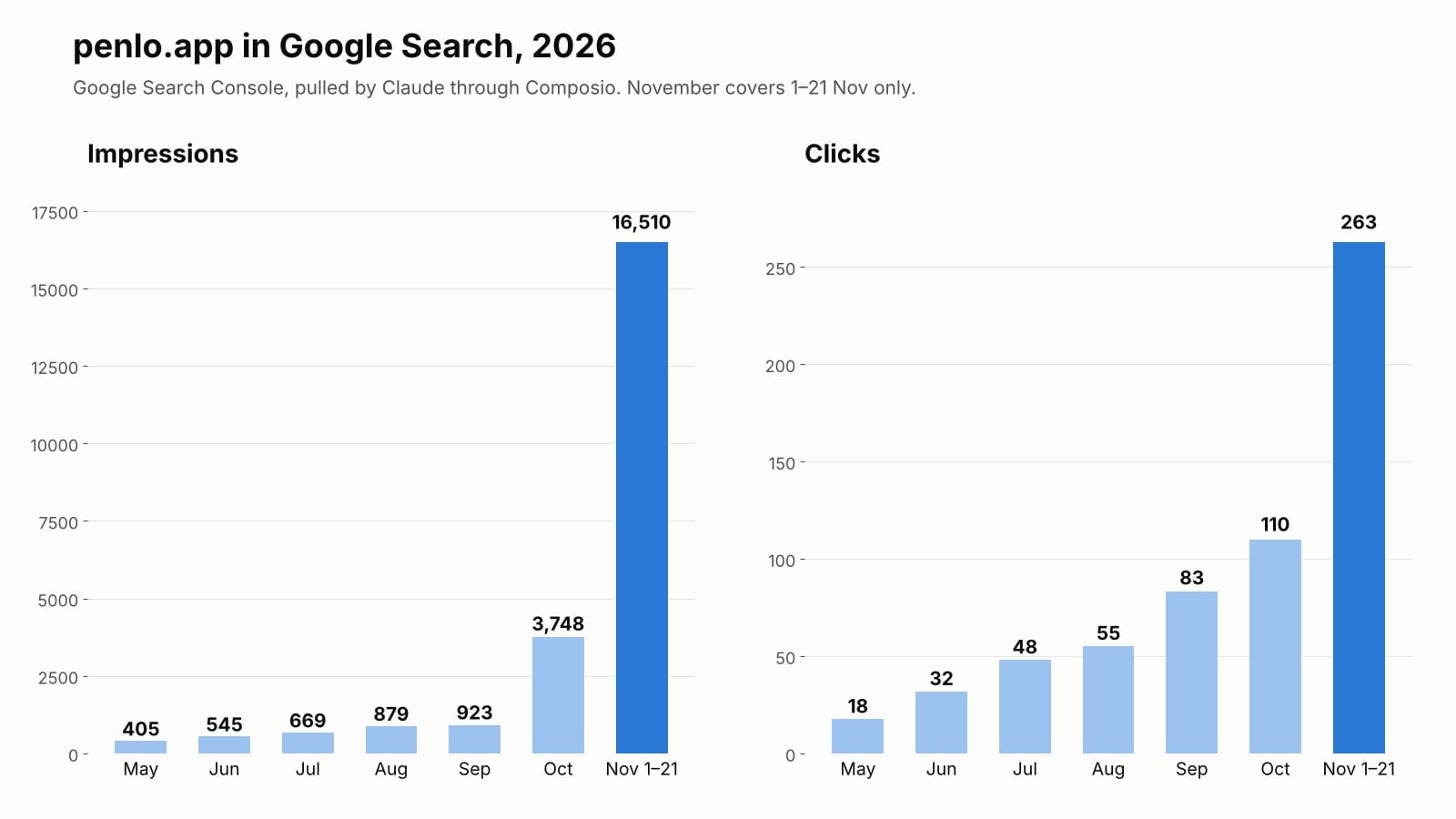
Two things stand out. First, it took months: from May to September, impressions grew slowly, from about 400 to about 900 a month. Then the comparison guides started ranking, and the first three weeks of November brought 16,510 impressions. Second, the guides now do more work than the homepage. Penlo's top pages by clicks over those 28 days:
| Page | Clicks | Impressions | Avg. position |
|---|---|---|---|
| reMarkable alternatives | 84 | 5,054 | 7.5 |
| Homepage | 47 | 990 | 3.6 |
| Best e-ink tablet for note-taking | 37 | 2,474 | 10.2 |
| BOOX vs Supernote | 19 | 568 | 6.5 |
| Sync BOOX notes to Dropbox | 17 | 853 | 7.9 |
| E-ink vs iPad for note-taking | 15 | 1,589 | 6.1 |
A side note on tools: Ahrefs estimated penlo.app at about 9 visits a month, against 308 real clicks in Search Console. Third-party tools only see keywords with measurable volume, so they badly undercount small, young sites. I use Ahrefs to size topics, not to measure myself.
Step 2: Size the topics
Next, Claude checks search volume for the questions my users actually ask. These are Penlo's, pulled from Ahrefs Keywords Explorer for the US:
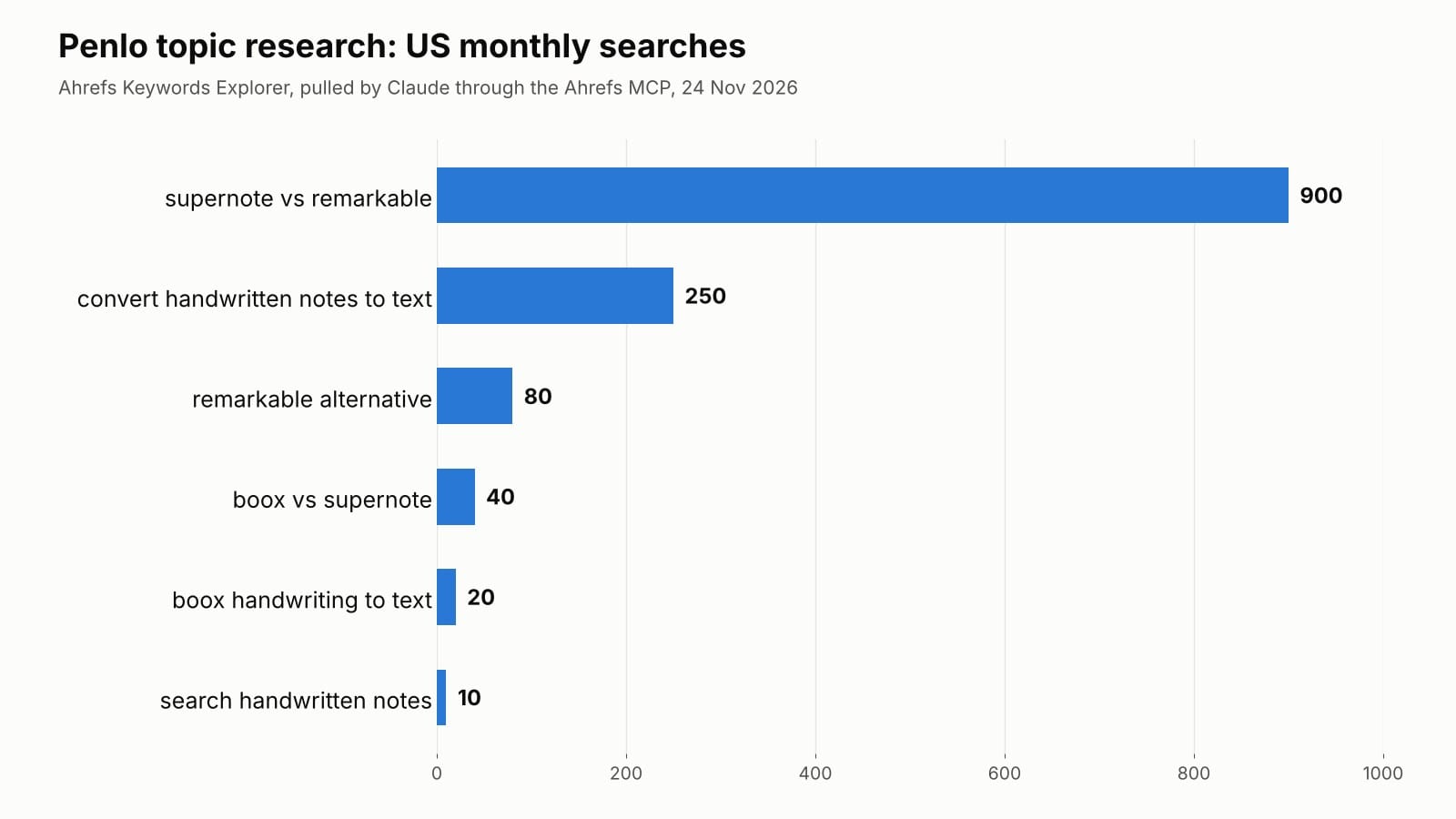
Put next to Search Console, the gaps are obvious:
- Comparisons win. "supernote vs remarkable" has about 900 US searches a month. Penlo already shows up for it, at position 9 on average, but got only 2 clicks in 28 days. Moving that guide from page one's bottom to its top is the clearest win on the list.
- The job beats the brand. "convert handwritten notes to text" (250 in the US, about 1,100 worldwide) is bigger than any BOOX-specific phrase, and Ahrefs puts its difficulty at 10 out of 100.
- "Alternatives" pages pull their weight. "remarkable alternatives" showed Penlo 339 times in 28 days, and the guide behind it is Penlo's best page.
- AI answers are already there. Most of these searches show a Google AI Overview. If my page isn't the one quoted, a ranking matters less than it used to.
Step 3: Write for both readers
The Penlo blog is a set of practical guides that answer those questions: reMarkable alternatives, BOOX vs Supernote, the best e-ink tablet for note-taking. Each guide is useful without Penlo and mentions it only where it genuinely helps.
Since more people now ask ChatGPT or Claude instead of searching, every guide is also written for the AI reader:
- One sentence near the top that says plainly what the product is and who it's for, so a model can repeat it.
- Fair comparisons. One-sided "we're the best" pages don't get quoted.
- Facts a model can check: supported devices, prices, what's free.
- Tables and short sections instead of long, flowing prose.
I covered the full list in lesson 12 of my 2026 lessons.
Step 4: Draft, check, publish
Claude drafts the guide straight into Ghost through Ectobuilder's connector, with screenshots, and leaves it as a draft. Then I do the part I won't hand over: I check every claim against the device or the docs. E-ink tablets change their sync options often, and an AI that's confidently out of date is worse than no guide.
Step 5: Check the AI answers
Once a month, I ask ChatGPT, Claude, Gemini and Perplexity the questions my buyers ask, like "how do I search my BOOX notes from my laptop?", and note whether my products come up and what the answers say about them. Ahrefs also has Brand Radar for tracking this at scale. Automating that check is the next step for me; for now it's a manual habit.
What I've learned so far
- Measure yourself with your own data. Search Console is free and exact; third-party estimates for a small site can be off by a factor of thirty.
- Research only happens when it's cheap. Having Claude pull the numbers made it a habit instead of a chore.
- Search is slow, then fast. Penlo's guides went months with little to show, then the first three weeks of November brought about eighteen times September's impressions.
- Pages that already rank on page one are the cheapest wins. Improving a guide at position 9 beats writing a new one from scratch.
Written by
Builder, product marketer and AI enthusiast. I ship my own apps, like Sift (siftphotos.pro), Penlo (penlo.app), Ectobuilder (ectobuilder.com) and Cubbie (cubbie.pro), and write about building and marketing them with AI.
Keep reading
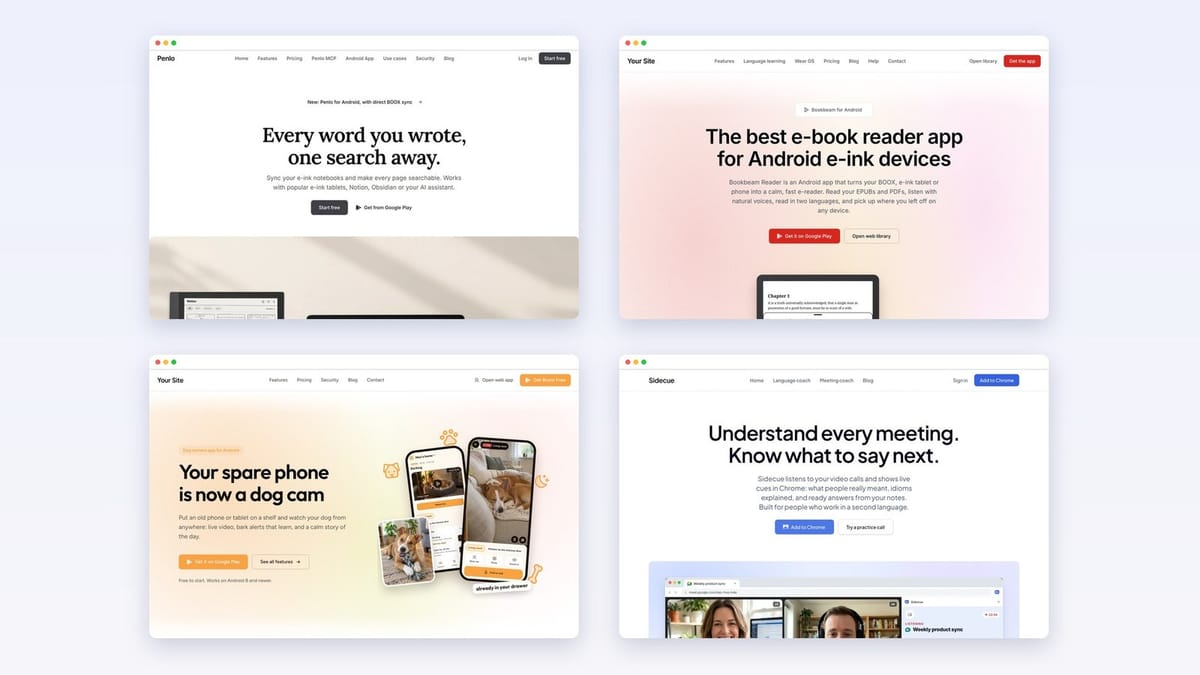
How I market my apps as a one-person team, with Claude as my marketing department
I build and market close to ten apps on my own. Here is the whole system: real numbers from Search Console, research in Ahrefs, product sites in Ectobuilder, store listings, email in Resend, payments in Polar, and Claude wiring it together.
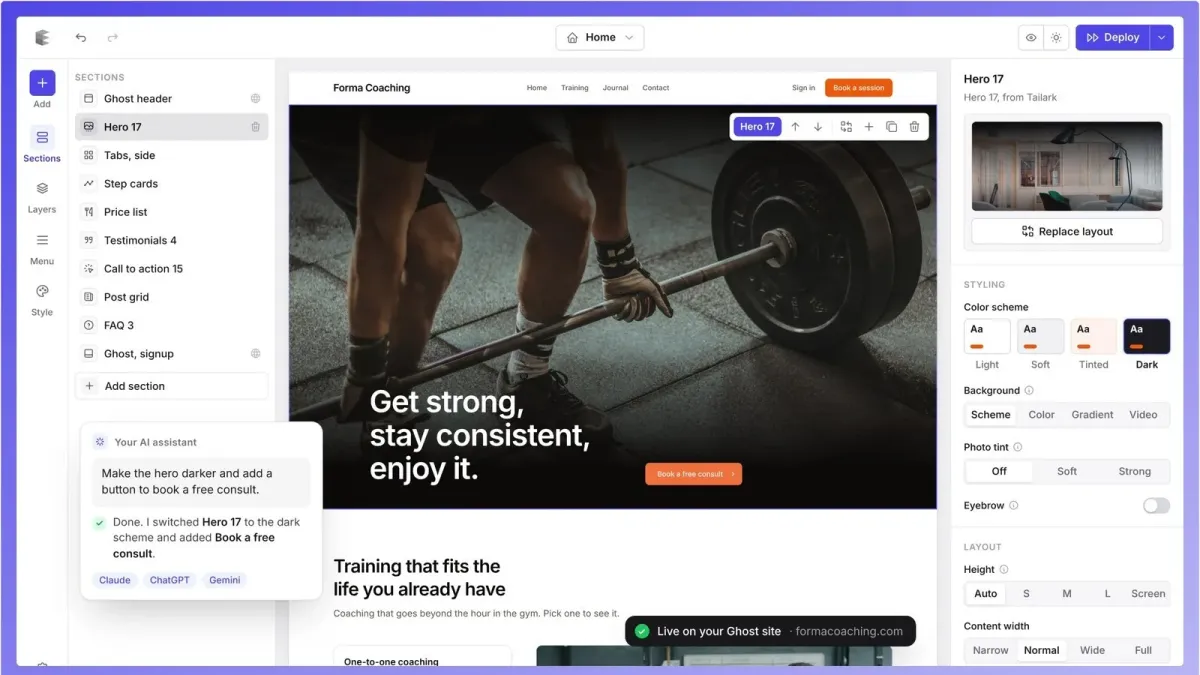
How I launch a product site and blog in an afternoon with Ectobuilder
Every product I ship gets its own site and blog on Ghost, designed in Ectobuilder. Here's the setup, and how Claude edits, screenshots and writes for those sites through Ectobuilder's connector.
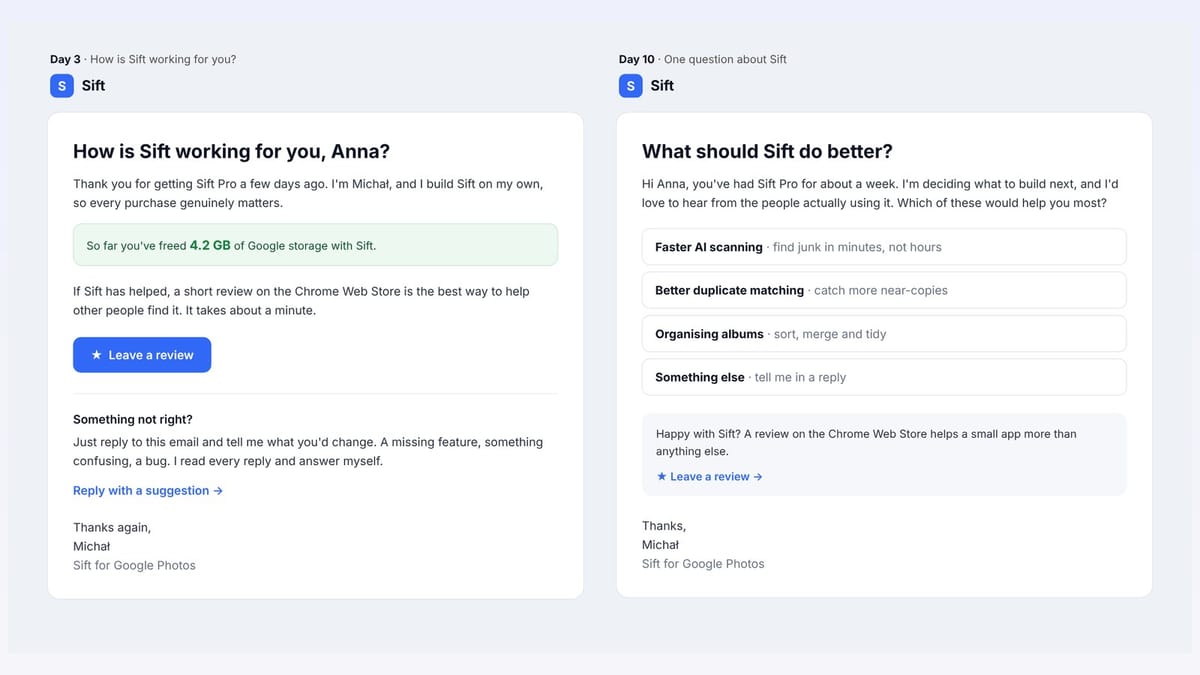
How I use email automation to onboard users and ask for reviews, with Resend
Branded sign-in emails, opt-in product news, and post-purchase emails that ask for a review on day 3 and for feedback on day 10. Here's how the email side of my apps runs on Resend, Supabase and scheduled Claude tasks.