I built and marketed 10 apps in 2026. Here's what I'd do differently in 2027
It has never been easier to build software, and never harder to sell it. Twenty lessons from shipping close to ten apps and staying under $1k MRR.

Michal Wlosik
· 19 min read
It has never been easier to build software. And it has never been harder to sell it. Here are 20 lessons for builders in 2027 and beyond.
I spent the better part of 2026 building and trying to sell software. Close to ten apps shipped: Chrome extensions, advanced desktop utilities, AI tools. Combined, they still haven't crossed $1,000 in monthly recurring revenue. Divide that by the hours I spent coding, fixing bugs and shipping updates, then subtract the Claude subscription that powered most of that building, and my effective hourly rate lands somewhere below a McDonald's crew member's. Some months, the AI that helped me build my apps earned more from them than I did.
I don't regret a minute of it. It was fun, and it taught me more than any course would have. But a lot of those lessons were a brutal reality check, and the market is moving fast enough that advice from two years ago already sounds dated. Here's what I'd tell anyone building apps right now (2027 onwards).
1. If it can be built in 30 minutes, it probably isn't a product
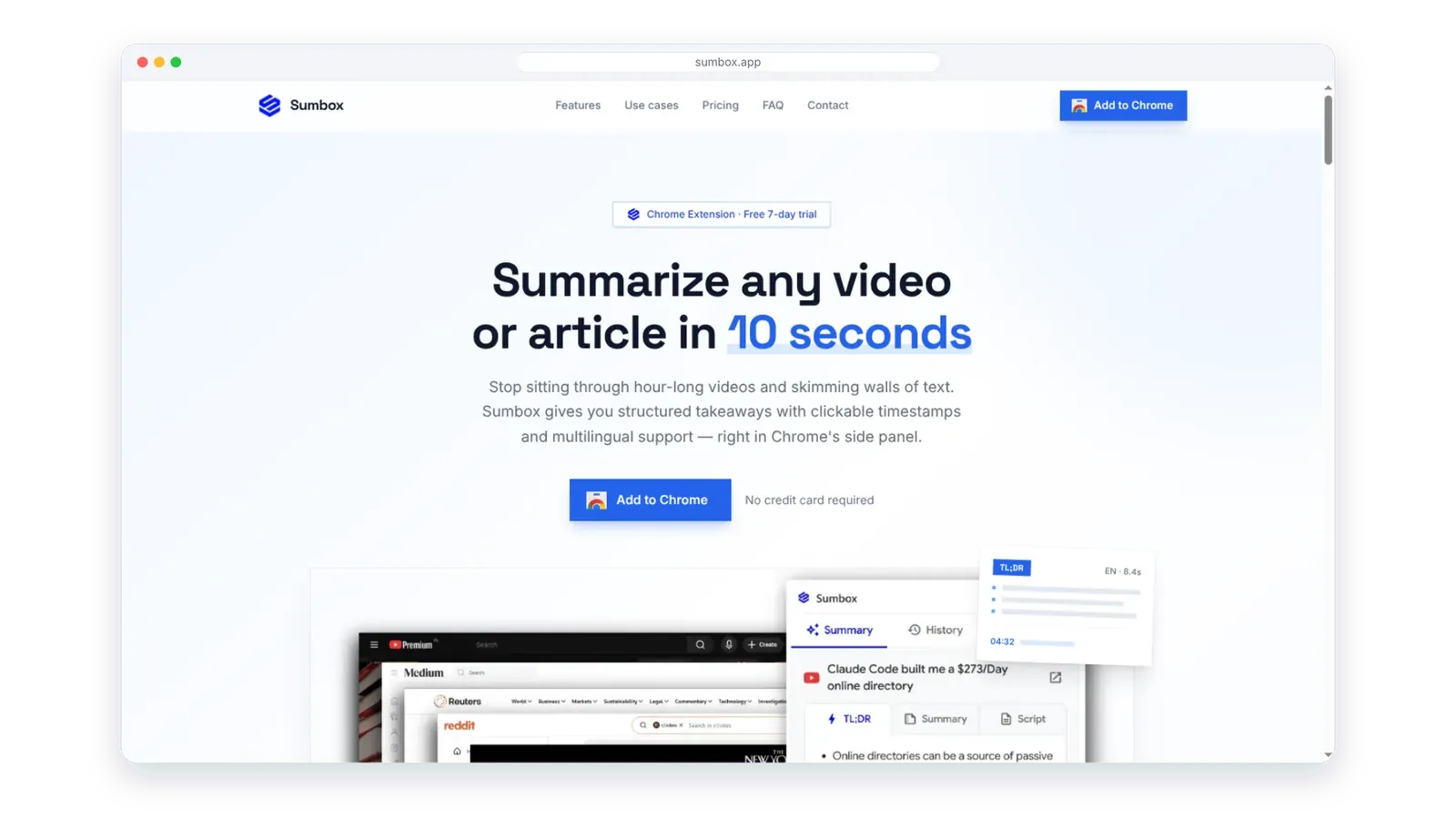
The AI wrapper era is ending. Agentic models like Claude Opus get noticeably more capable every few months, and every upgrade quietly eats an entire category of paid tools. Summarize this page, rewrite this email, pull the data out of this PDF, turn these notes into a table, you name it: a year ago each of those could justify a $9/month subscription. Today people just ask the assistant they already pay for.
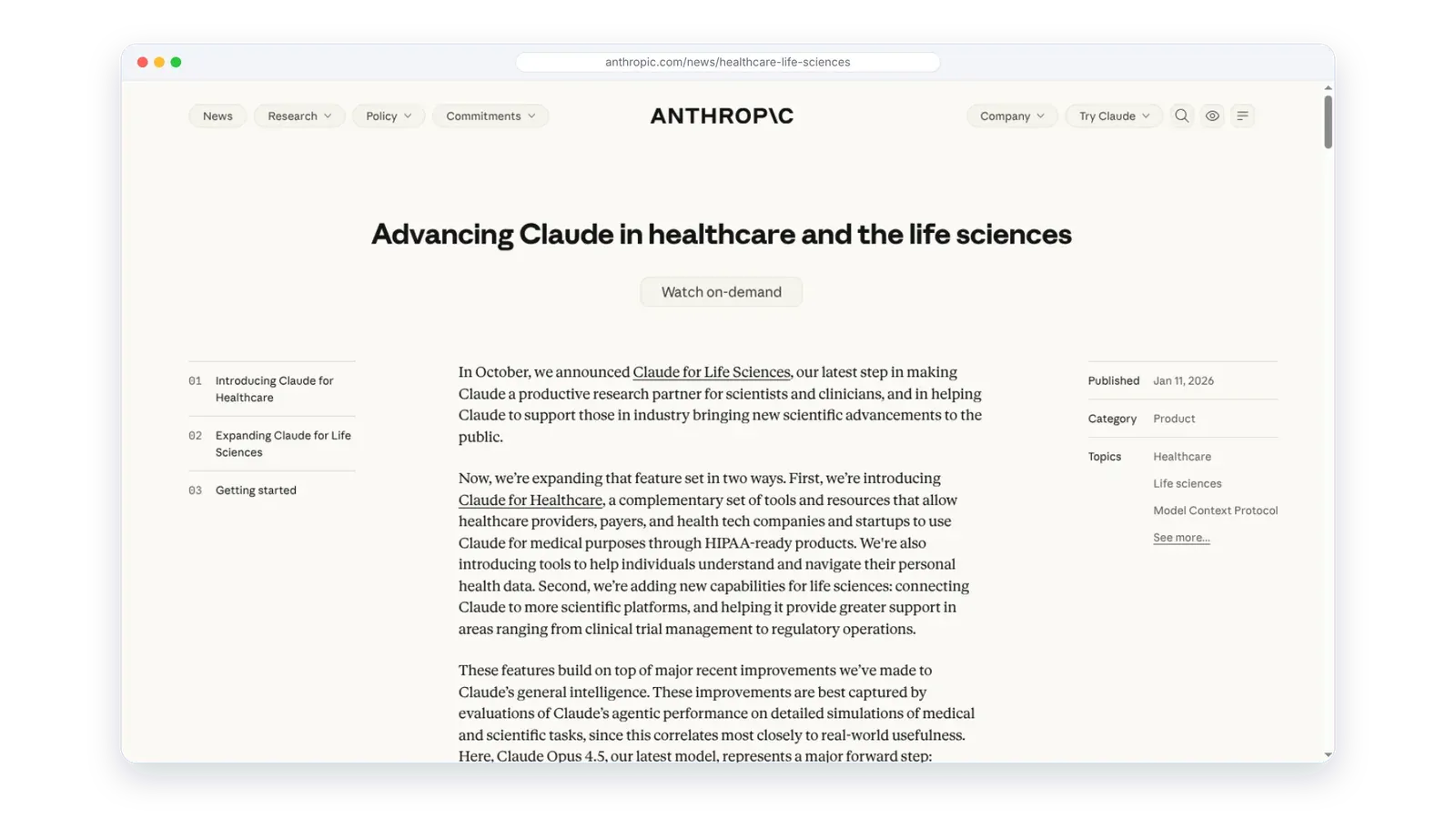
It doesn't stop at text. In January 2026, Anthropic let Claude Pro and Max subscribers in the US connect their lab results and health records, with Apple Health and Android Health Connect integrations rolling out in beta.
Claude can now summarize your medical history, explain test results in plain language and spot patterns across your fitness and health metrics. OpenAI launched ChatGPT Health days earlier, and Google turned its Gemini-powered coach into the Google Health Coach (although that one sits behind Google's own Premium subscription). A whole category of apps that charged a monthly fee to "analyze your data" is being absorbed by assistants people already pay for.
That changes who you're competing with. It's not other startups. It's the chat box your customer already has open in another tab.
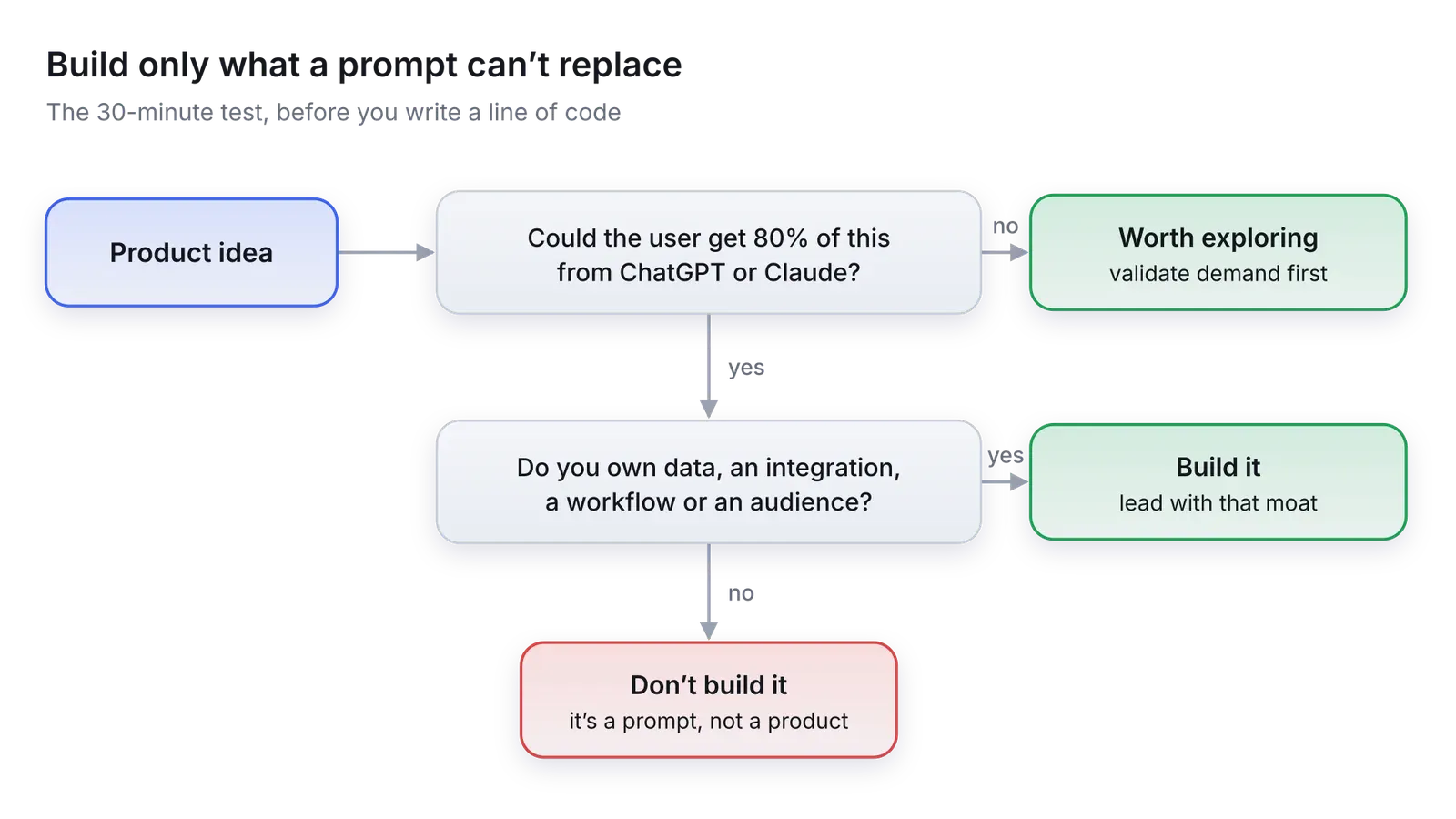
There's a second problem. If you can build something in half an hour with one prompt, so can everyone else, including your customer. Before you build, ask one question: could my target user get 80% of this by asking Claude or ChatGPT? If the answer is yes, you need something the model can't hand them: proprietary data, a deep integration, a workflow that lives where they already work, or an audience that trusts you.
2. Simple beats complex
It may sound obvious, but hard to build doesn't mean easy to sell. A complex product feels like an achievement, but mostly it's harder to explain to your audience, harder to maintain and harder to sell.
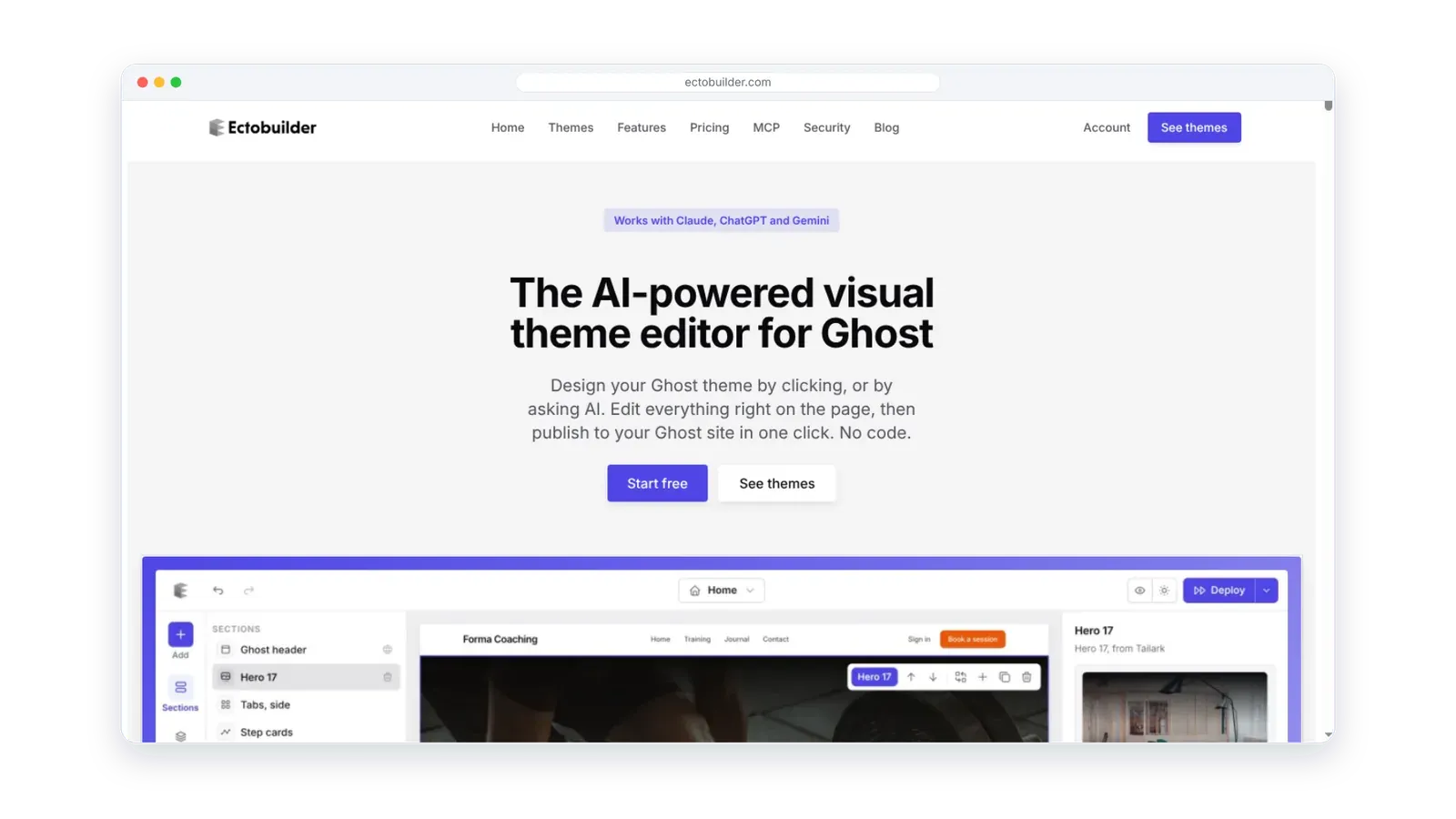
I learned this the hard way with Ectobuilder, an AI-powered visual theme editor for Ghost. It's the hardest thing I've built to date: 400+ ready sections, one-click publishing to Ghost, and an MCP server so Claude, ChatGPT and Gemini can design themes for you. And it's still struggling to build a user base. Every feature I added made the pitch longer, not the product easier to buy.
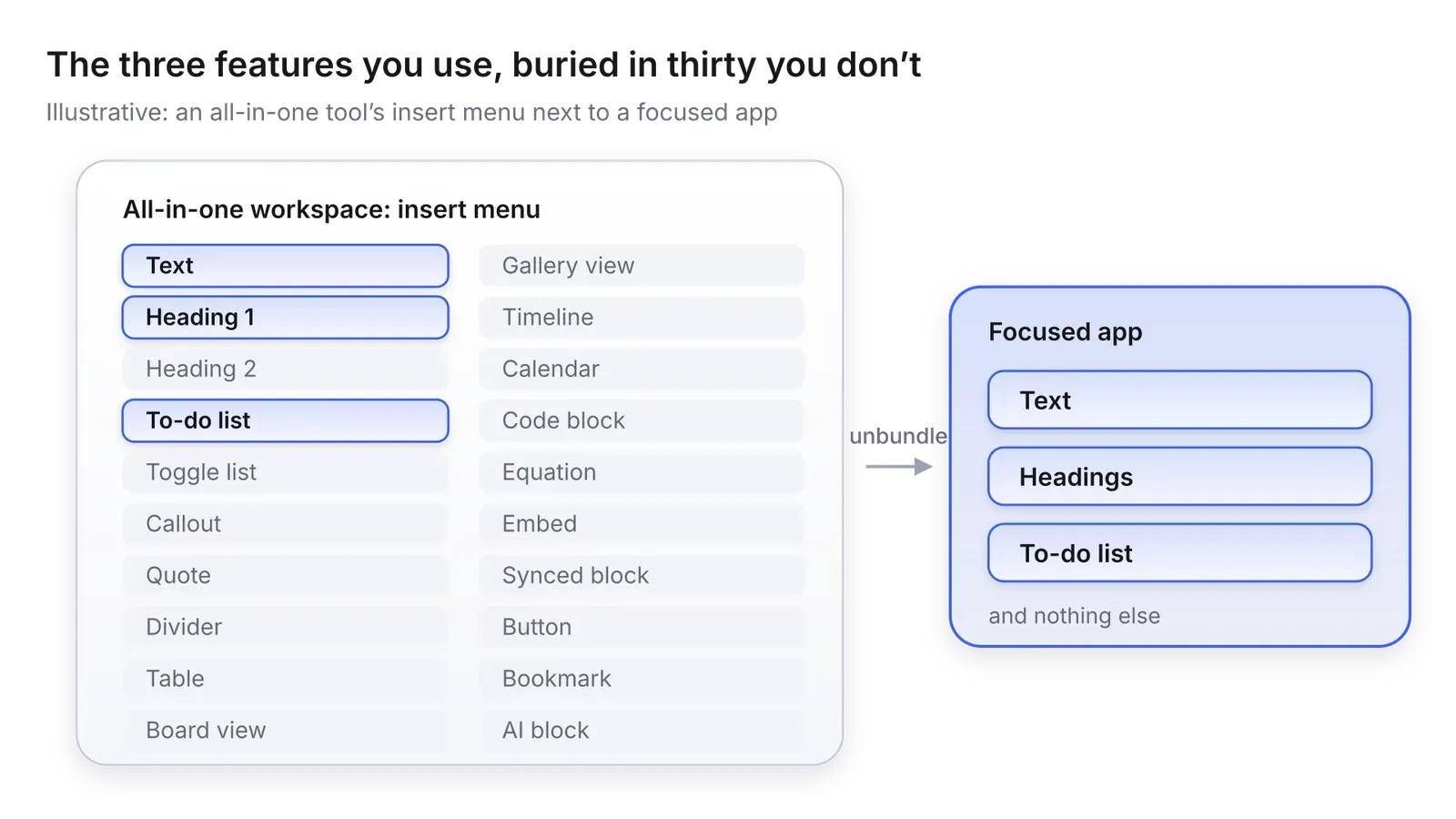
Meanwhile, people can now vibe code a small tool that fits their needs exactly. Many of them would rather have the three features they use than thirty they don't. Notion is a good example: a category leader that has grown into a big, complex tool full of features most people will never touch. That's not a knock on Notion. It's an opening for anyone who builds the focused version of one slice of it.
3. Code is cheap. Data is the moat
People are tired of subscriptions. The ones they keep paying for increasingly give them access to something they can't easily get anywhere else (think Netflix). Code is solved today and simple software can be regenerated in an afternoon. Access can't.
A few examples of what that looks like:
- Vehicle history and real-time car data (mileage, service records, accident history)
- Property, land and building records that are public in theory but painful to search in practice
- Price history for flights, hotels or marketplace listings
- Live local prices, like an app that tracks which petrol stations in your area are cheapest today
- Niche datasets you've collected, cleaned or licensed yourself, like past exam papers for a test-prep app
- Aggregated local knowledge: which places reviewers actually recommend, which contractors actually show up
If your product is the only convenient door to a dataset, the model can't replace you. It can only make you better.
4. Competition may be a good sign
Don't get discouraged by existing products in your niche. Competition proves people already pay for the problem. And plenty of those products are bad, old or quietly abandoned, waiting for someone to refresh them with a better UI and the features users keep asking for.
Where to look:
- Chrome extensions with six-figure user counts whose last update was years ago
- Windows and Mac utilities that work, but look like they were designed in 2009
- Popular open-source tools that are powerful but only usable if you're willing to edit config files
- App store listings where the top reviews are all the same complaint
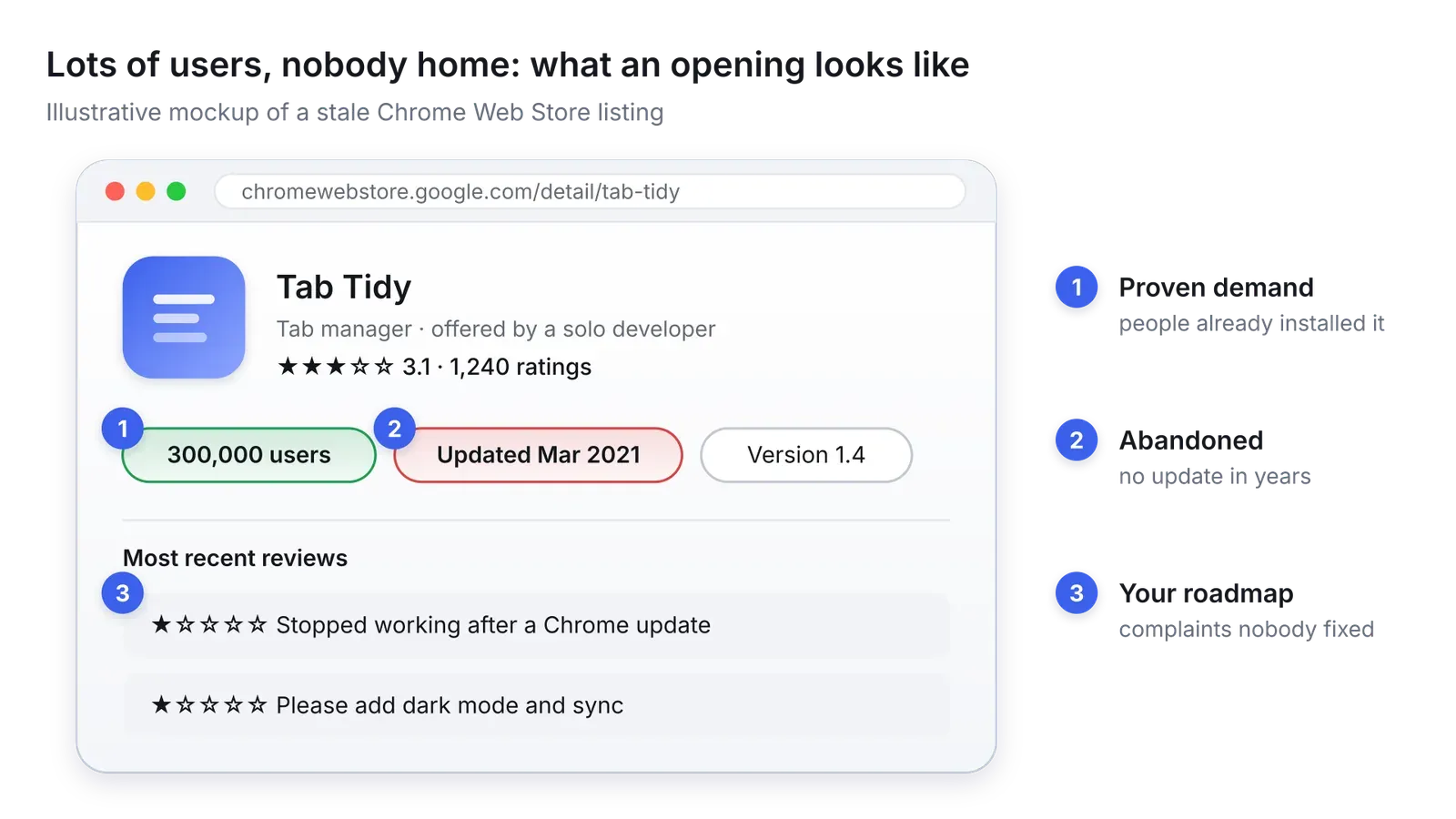
Read the one-star reviews. They're a free product roadmap.
Just remember that a refresh is only a head start. If you can modernise a stale extension in an afternoon, so can the next ten builders who spot the same opening. You win on distribution and reviews, not on the rebuild.
5. Save people time or money, or don't bother
Build products that help people save time, save money, or meaningfully improve their lives or workflows. Ideally all four. Everything else is noise or entertainment, and entertainment is a much harder business than it looks.
6. Match your pricing to how often people need you
In a subscription economy, recurrence is everything. People need a genuine reason to pay you again next month. If your app does a one-time job, like converting an image format, a subscription model will fight churn forever and you'll never build a real user base.
Tribute gets this right. Most people need a group video for a birthday or a farewell a few times a year at most, so it charges per video, from $35, instead of per month.
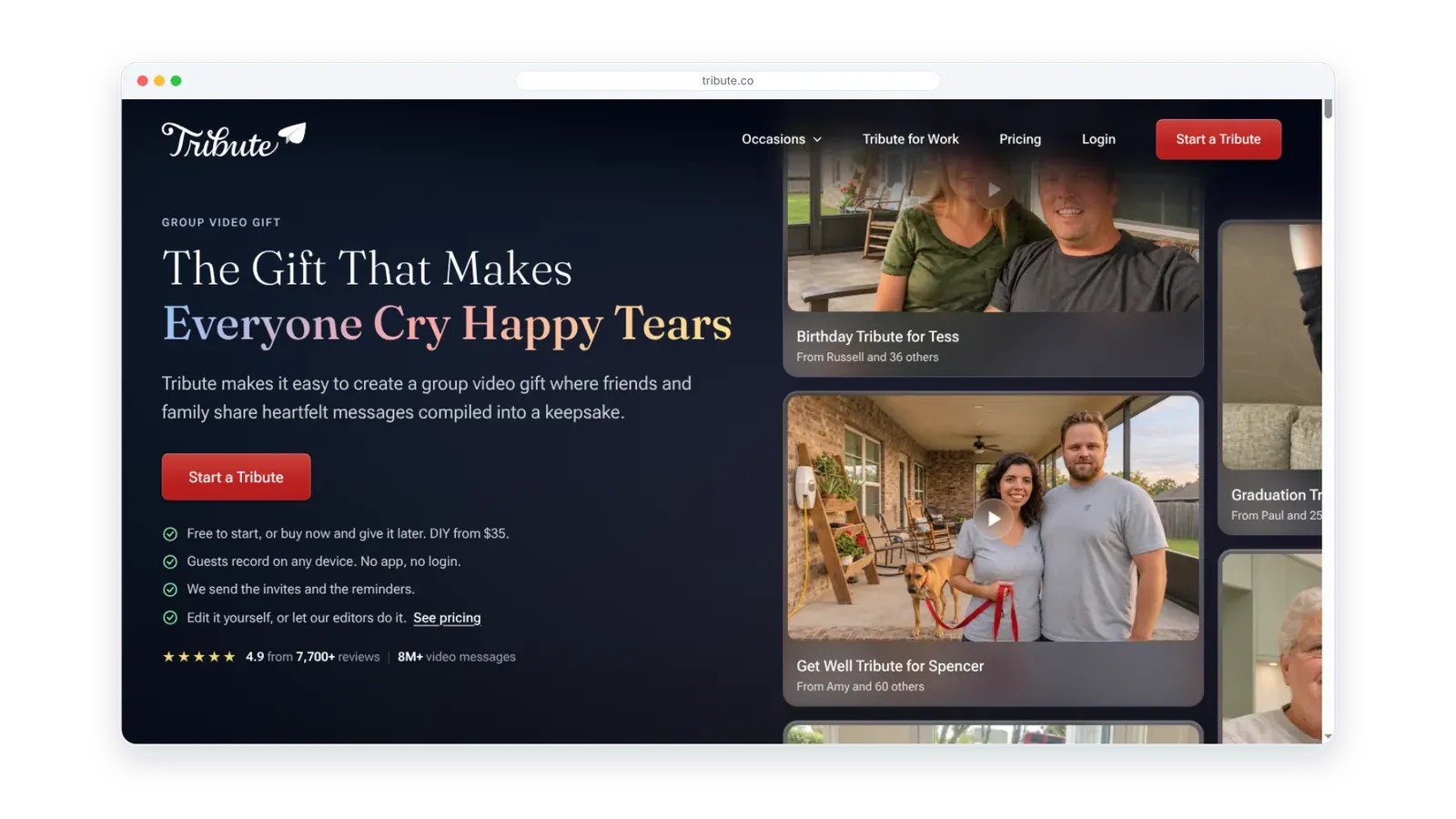
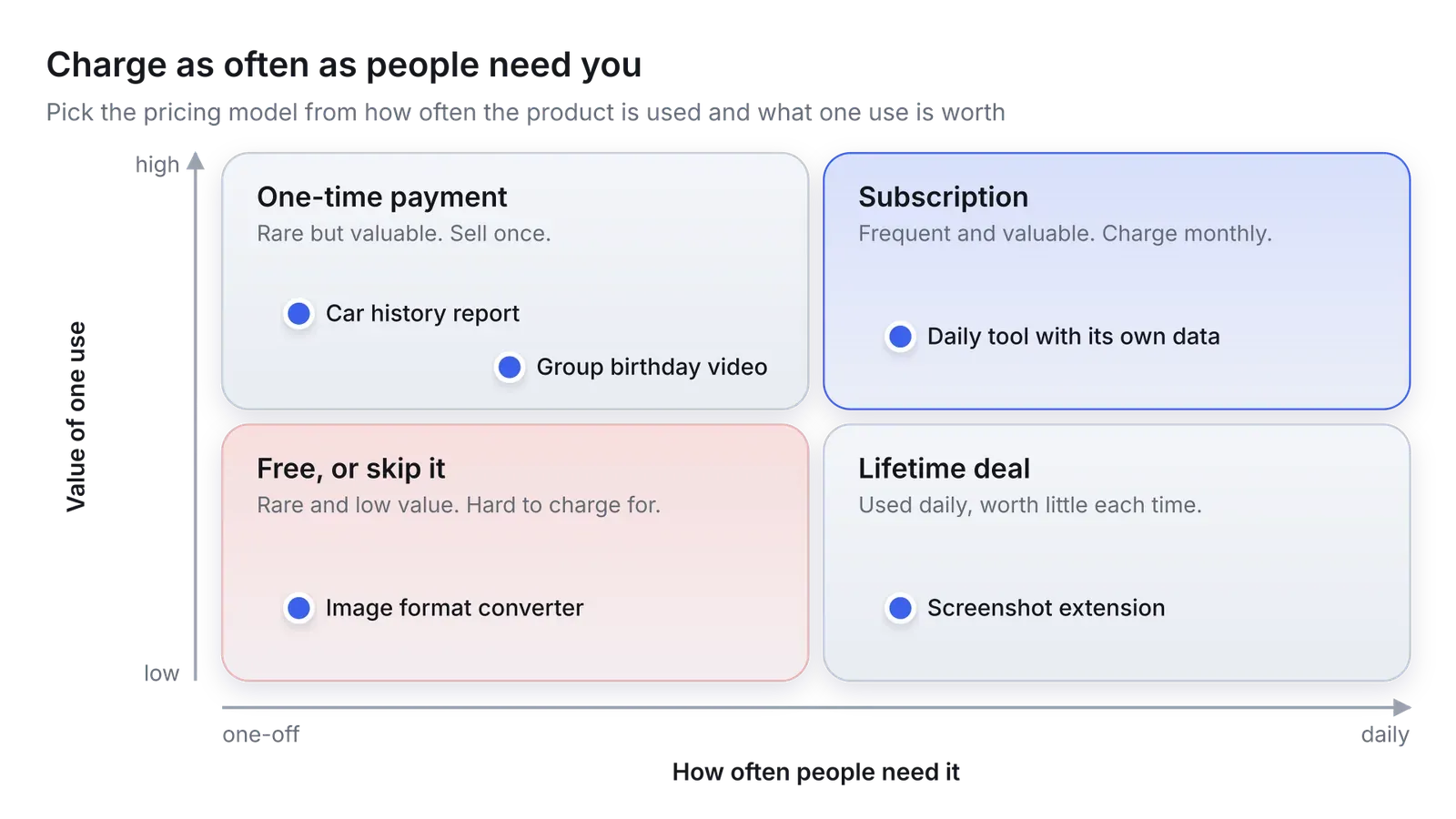
If the value isn't monthly, don't charge monthly. Which brings me to my next point.
7. One-time payments are coming back
In 2027, subscription apps will be fighting on thinner margins and steady churn. I think the smarter play for many indie products is a one-time payment. A lifetime deal can still generate healthy income, especially when it's pitched to people who are tired of paying monthly for a competing tool. This is your opening. If you can build a subscription management app that needs no subscription, I'm on board.
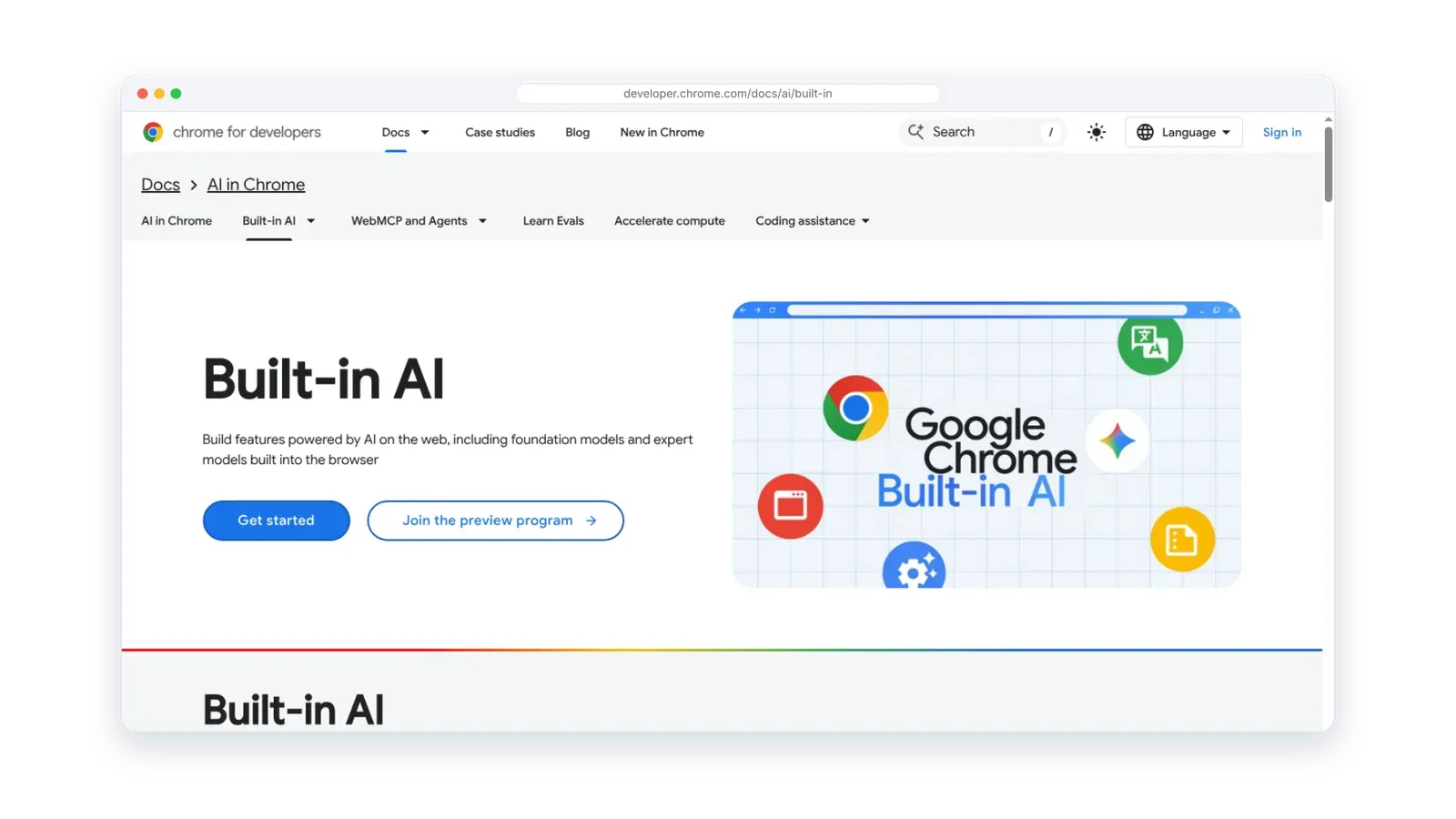
On-device AI and specialized open-source models is what makes this realistic today. Many apps no longer need a paid cloud API at all. Chrome itself ships with Gemini Nano built in, and for summarizing, classifying, extracting and rewriting it works surprisingly well. No per-request costs means you can sell once and still be profitable, and your users get privacy as a bonus.
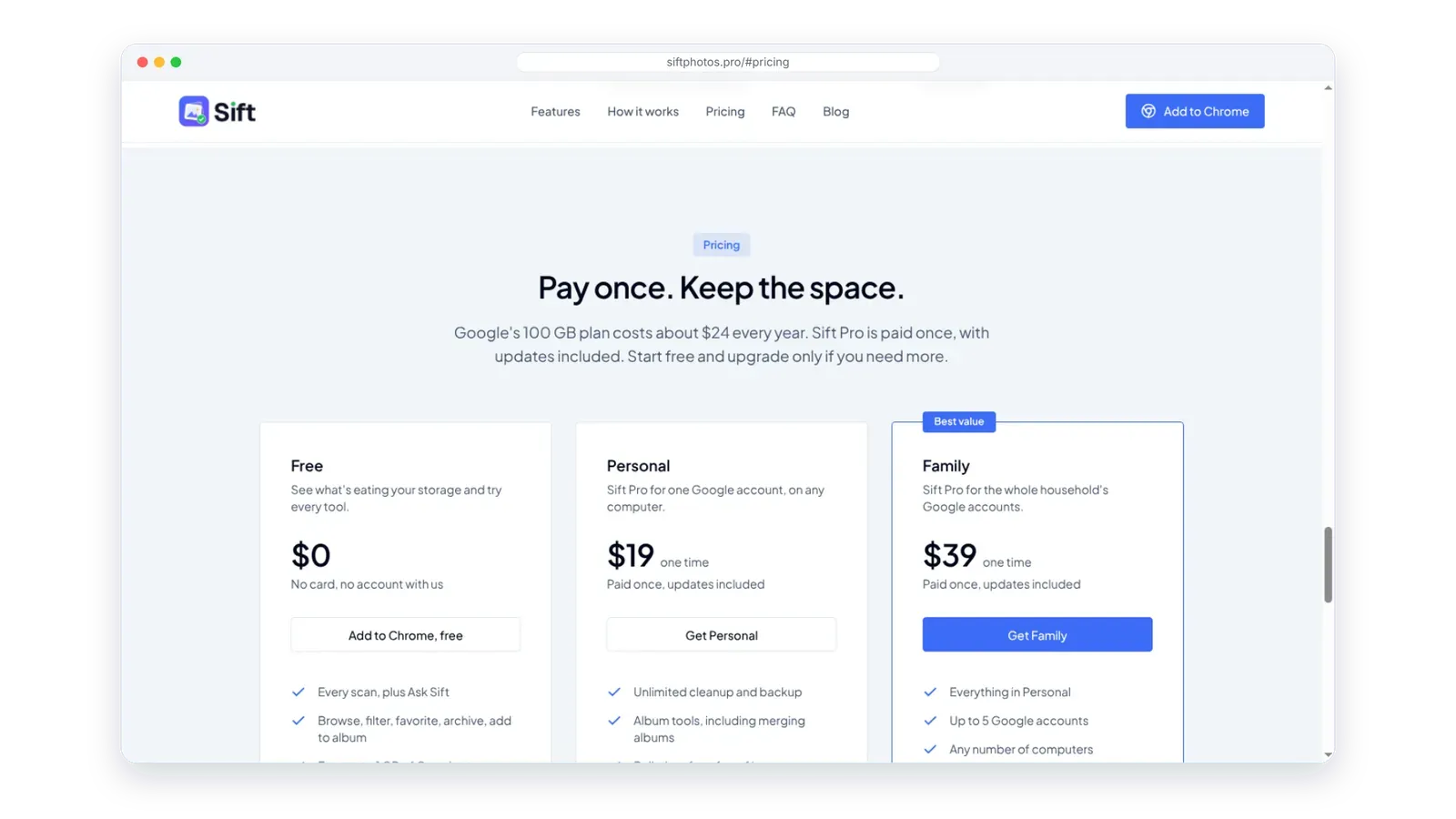
My own Sift is built this way. It frees up Google Photos storage, runs its AI features on Gemini Nano so your photos never leave your computer, and sells Pro as a lifetime licence: $19 once, or $39 for a family. That's an easy pitch next to Google's storage subscription, which you pay for every year.
One caveat: on-device AI cuts your costs, it doesn't give you a moat. A summarizer running on Gemini Nano is still an AI wrapper, just a cheaper one to run. Pair it with something from lesson 3, and the one-time price becomes your edge on top of it.
8. Don't build for developers
Tech-savvy people make the worst customers. They're discerning, they rarely pay for something they could build in an evening, and if they have the time, they'll copy your product and undercut your price. And even if they don't bother copying your business, they still won't pay you.
Build simple products for non-technical people instead: the ones who don't know how to vibe code, or just don't want to spend their weekend figuring it out. But simple means simple to use, not trivial to build.
Your customer may not code, yet they can still ask the chat box, so the product needs something a prompt can't hand them: data, an integration, or a workflow that lives where they already work. This matters most for Chrome extensions, where many popular categories (screenshot tools, ad blockers, tab managers) can be rebuilt and improved with a single prompt.
9. Build for problems you know
Start with something you need yourself. Worst case, you never make a sale, but you've solved your own problem and maybe replaced an app you were paying for.
Then go further: build in niches you know inside out. Don't build products just because you can. Even a great product fails if it's built without a real understanding of the problem, the people who have it and the words they use to describe it.
Take Shopify apps. With today's tools, you could technically build one this week. But unless you work in ecommerce or run a shop yourself, don't. You won't know which problems merchants would actually pay to make go away, how they talk about them, or where they go looking for solutions. Someone who has run a store for five years will out-build you on insight alone.
10. Marketing is the job now
Building is cheap. Distribution and attention are priceless. If you can, build your own audience before you need it.
The easiest way to do that is to start the audience alongside the product, not after it. Run a YouTube channel in your niche that's genuinely worth watching on its own: tutorials, teardowns, opinions, the problems you see every day. Or build in public, sharing your progress, numbers and mistakes on X, LinkedIn or a newsletter as you go. Either way, by launch day you're not shouting into the void. You're telling people who already know you, and who often helped shape the product.
A fitness YouTuber who launches yet another fitness app can succeed, because thousands of people are ready to try it on day one. Your fitness app might be better. But it probably won't matter if you can't launch it to an audience you own.
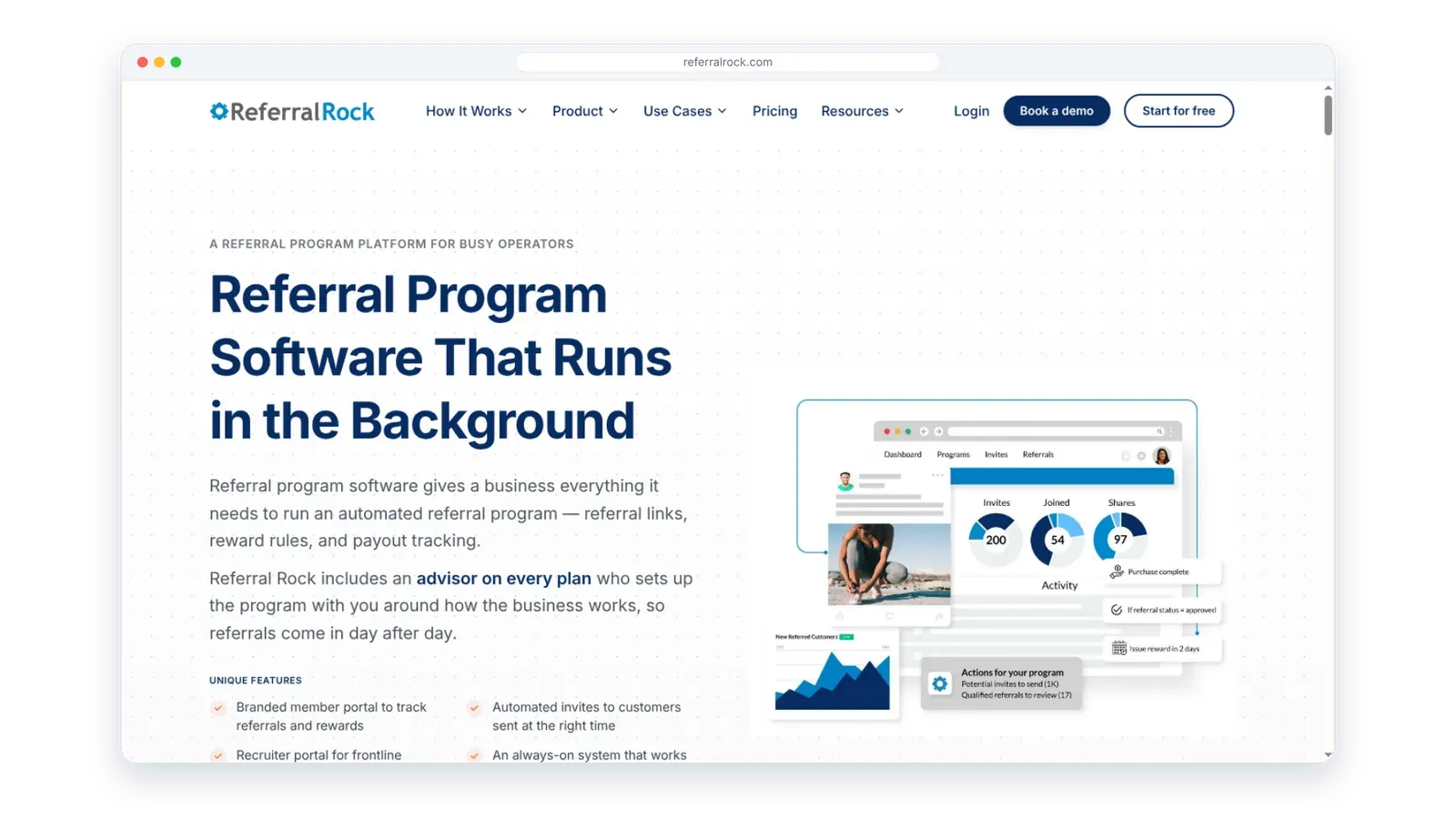
No audience of your own? Borrow one. Your marketing budget will often go further on a partnership with a fitness influencer than on Google Ads. One creator your buyers already trust can bring in more paying users than a month of clicks you'll pay for again next month. Pay them per sale, not per post: referral and affiliate platforms like Referral Rock handle the tracking and payouts, so you only pay for customers who actually convert.
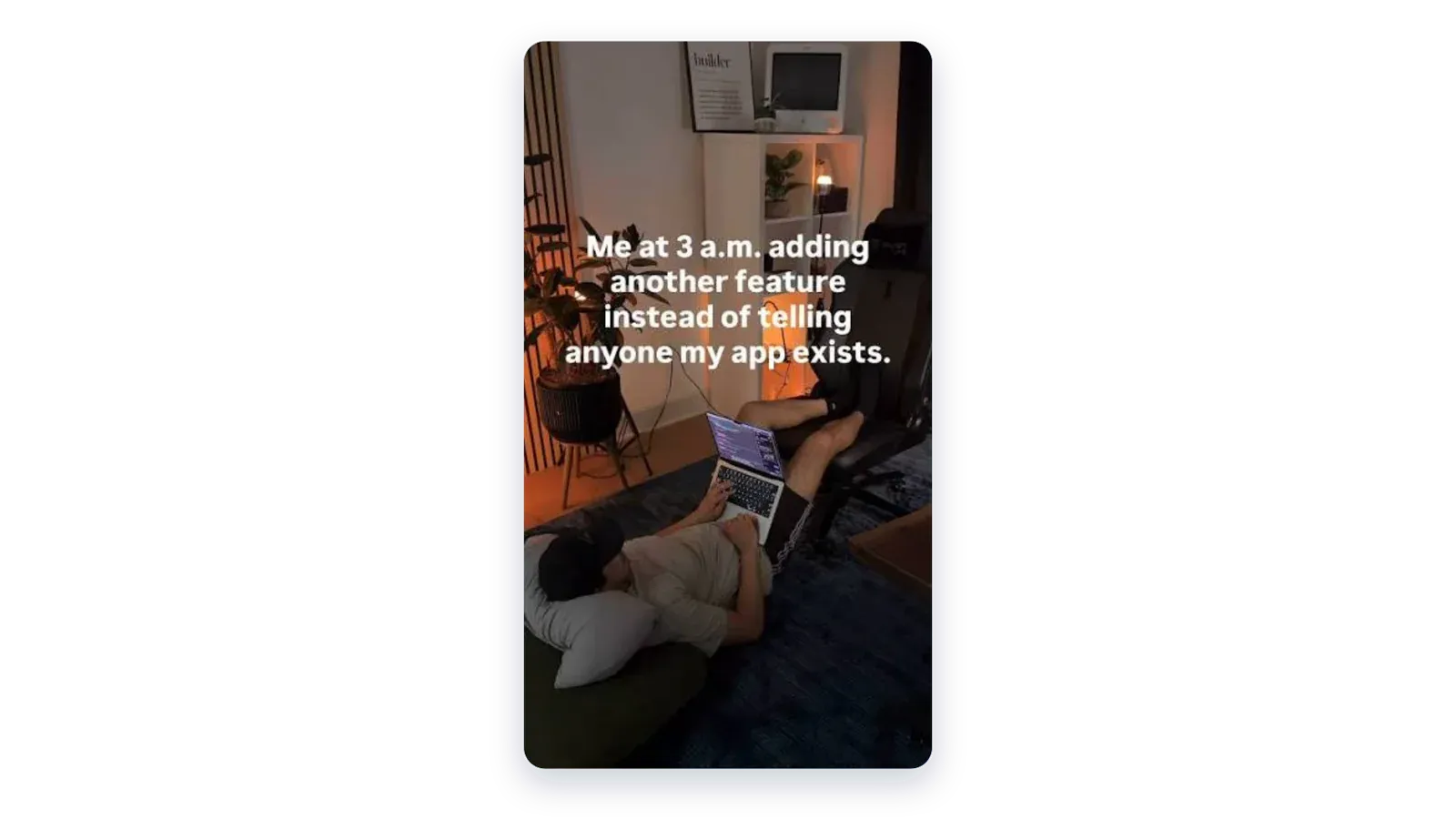
Most builders spend 80% of their time on the product and 20% on marketing. That ratio made sense when building was the hard part. It isn't anymore. Flip it: build fast, ship an MVP to probe the market, and move on if it doesn't take off. Spend more time marketing than polishing.
11. Budget to spend before you earn
Expect to spend real money before you make a cent. Spend it on speed, not polish. Skimping on the basics (a proper database tier, a good AI coding subscription, decent hosting) doesn't save you much. It just makes you slower, and speed is the main advantage a solo builder has. Yes, even when that subscription eats your margin, as mine did.
This doesn't clash with shipping cheap MVPs. Go deep on the niche, and stay cheap on each attempt at solving its problems.
12. Get recommended by AI, not just ranked by Google
More and more people skip the search results and ask ChatGPT or Claude: "what's the best tool for X?" If the assistant doesn't mention you, you don't exist for that buyer.
Write for that reader too. Publish clear comparison pages, honest "X vs Y" posts and docs that state plainly what your product does and who it's for. Show up where models learn from: Reddit threads, review sites, directories and forums in your niche. Then check it yourself. Ask the assistants your customers use the question your customers ask, and see who comes up.
A few practical ways to get there:
- Say what you are in one quotable sentence. "Sift is a Chrome extension that frees up Google Photos storage" is something a model can repeat. "Reimagine your memories" isn't.
- Publish comparison and alternatives pages. "X vs Y" and "best alternatives to Y" match the exact questions people ask assistants. Keep them fair: one-sided pages get ignored.
- Make your product facts machine-readable. Add structured data (SoftwareApplication, Organization, FAQ), a public pricing page and a changelog. Models can't recommend what they can't describe or price.
- Don't block AI crawlers by accident. Check robots.txt for GPTBot, ClaudeBot and PerplexityBot, and consider adding an llms.txt file.
- Get listed where models look. Product Hunt, G2, Capterra, niche directories, GitHub "awesome" lists and the subreddits your buyers read.
- Earn mentions on other people's sites. Roundups, guest posts and podcast appearances count for more than anything you say about yourself.
- Track it monthly. Ask ChatGPT, Claude, Gemini and Perplexity the same buyer questions and note whether you show up, and what they say about you.
13. Build for agents, not just people
AI agents are turning into users. When someone asks Claude to book, file, track or export something, the agent goes looking for a tool it can call.
An API or an MCP server lets your product work inside Claude, ChatGPT and whatever comes next, without the user ever opening your app. Connector directories are a new distribution channel, and most indie builders aren't on them yet. Being early there is cheaper than being early on Google ever was.
The big players are already there. A few connectors you can add to Claude today:
- Webflow, Framer and Relume: Claude can pick components, build pages, edit the CMS and publish a site, without you opening the designer.
- Figma and Canva: Claude reads designs, generates diagrams and creates or exports graphics in your own files.
- Gleap: Claude searches support tickets, drafts replies, reads survey results and updates help articles.
- Stripe, Supabase and Vercel: Claude checks payments, queries your database and debugs deployments, straight from the chat.
- Notion, Slack, Asana and Linear: Claude finds documents, posts updates and moves tasks across the tools a team already lives in.
- Tally: Claude builds forms and analyzes the responses.
Ahrefs shows how much this changes a whole discipline. SEO used to mean logging into a dashboard, exporting CSVs, building a spreadsheet and working out what it all meant. With the Ahrefs connector, you just ask. "Which of my pages lost traffic this month, and who took those rankings?" Claude pulls your Google Search Console data, checks the keywords and backlinks, compares you with the competitors that overtook you, and comes back with a list of pages to fix. It can also check Brand Radar to see whether ChatGPT, Perplexity and Google's AI answers mention or cite your brand, which is lesson 12 in practice. The SEO specialist's job is shifting from operating the tool to asking the right questions. And the tool that's easiest for an agent to use wins the specialist.
None of these companies is giving up its own app. They're adding a second front door, one their customers' agents can walk through.
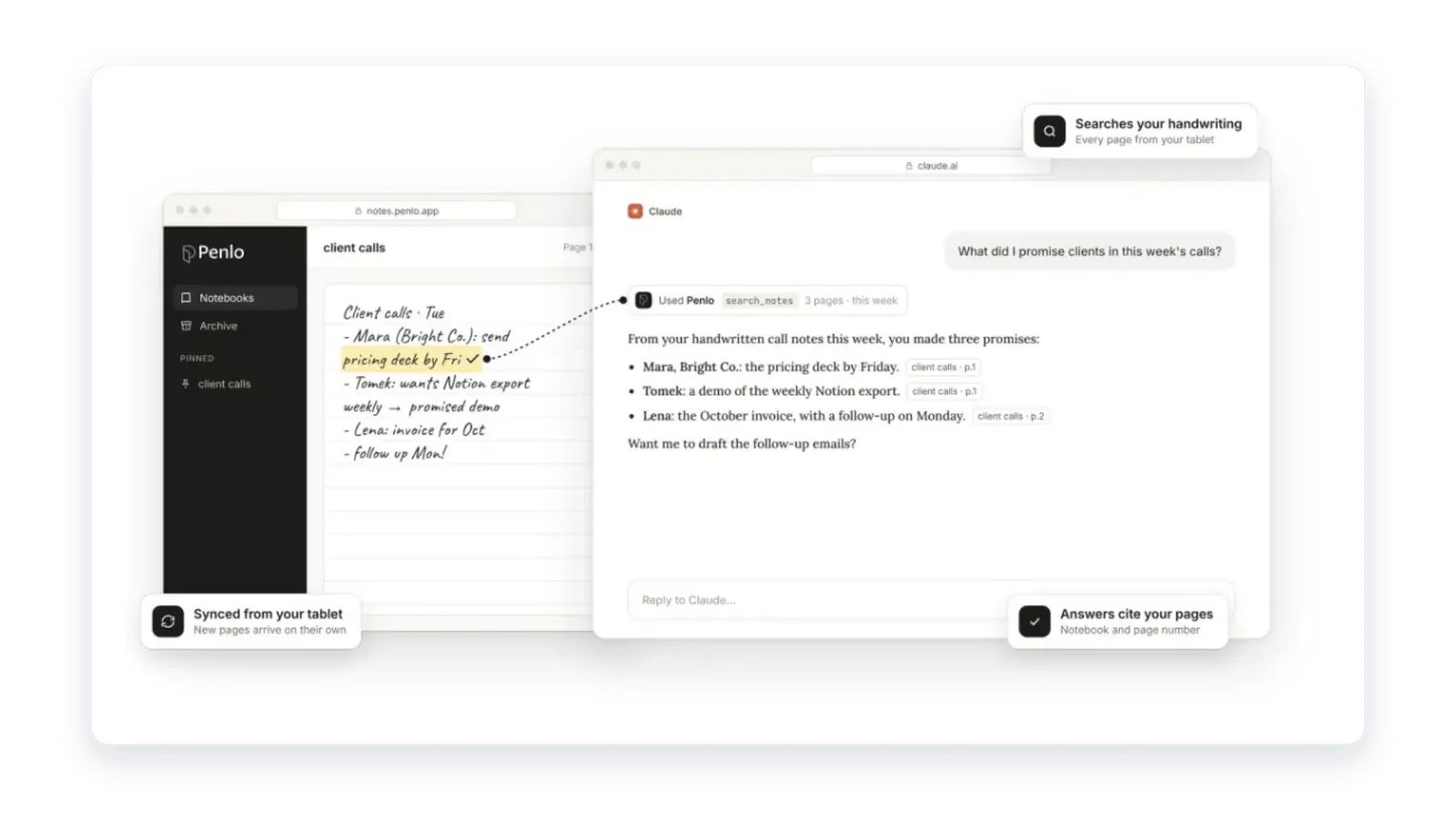
Small products can do the same. My own Penlo turns handwritten notes from e-ink tablets like BOOX, reMarkable and Supernote into searchable text. It also has an MCP connector for Claude. So instead of scrolling through notebooks, I ask Claude "what did I sketch out about pricing last week?" and it searches my handwriting, opens the right notebook and answers. The app does the transcribing; Claude does the remembering. For a tiny product, that connector is a feature most competitors don't have, and a reason to pick Penlo over a plain notes app.
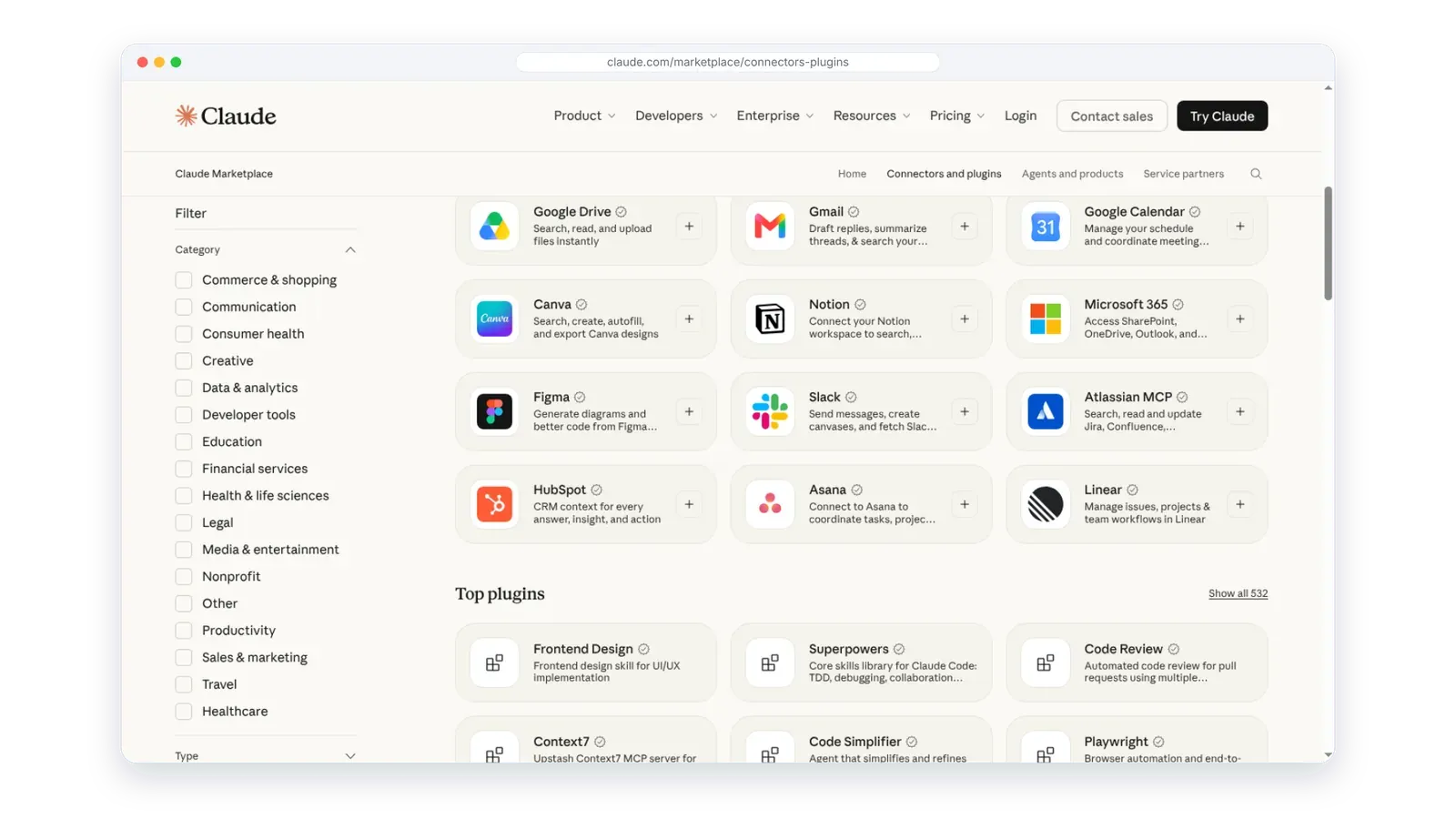
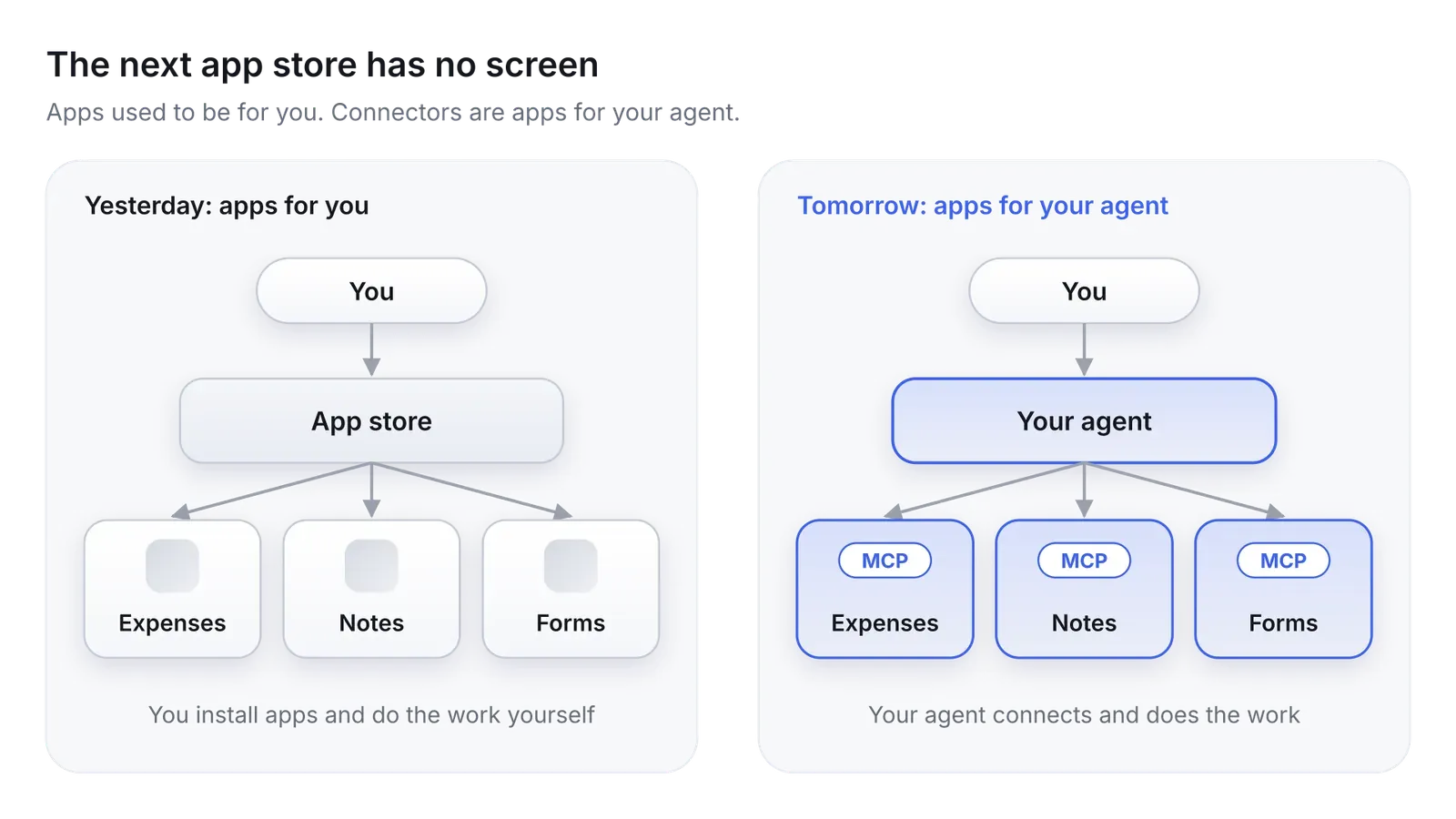
I think MCP connectors will soon be the new Play Store. They're apps, just not for you. They're apps for your agent. Ten years ago you'd install an app to track your expenses. Soon you'll connect one, and your agent will do the tracking. The builders who list early will own the top spots, the same way early mobile developers did.
14. Build for an ecosystem
A standalone app has to find every user on its own. Plugins and extensions get a head start: they live where people already work, and the platform's marketplace does part of your marketing for you. The Chrome Web Store, Shopify's App Store, WordPress plugins, Figma Community, Ghost and Notion integrations, and now Claude's plugin and connector directories all come with built-in search, reviews and buyers who already have the problem you solve.
An ecosystem also makes your pitch shorter. "A tab manager for Chrome" or "a theme editor for Ghost" explains itself in a few words, and you know exactly where your customers hang out: the platform's forums, subreddits and newsletters.
Still, keep a way to reach your users outside the store, like an email list. Because there's a catch: in an ecosystem, you're selling from someone else's shelf. And whoever owns the shelf can stock it themselves.
15. The platform can ship your feature tomorrow
If you build on top of Chrome, Claude, Shopify or Notion, you're also one product update away from being made redundant. Chrome keeps adding built-in Gemini features. AI assistants keep absorbing what used to be standalone tools.
Pick problems that are too niche, too local or too fiddly for the platform to bother with. A big company won't build a feature for 5,000 users. You can make a living from them.
16. Go local
AI made translation and localisation almost free, yet most indie builders still only ship in English and fight over the same crowded market.
A Polish, German or Spanish version of a proven idea often faces a fraction of the competition. Local payment methods, local regulations and local language in your marketing are a moat that global players rarely bother to cross.
Local also means where your data lives. Plenty of buyers choose a tool not for its features, but for where it stores their data. In Europe, GDPR turned that into a buying criterion. A company that has to answer to its legal team will often pick the EU-hosted option over a more powerful American one.
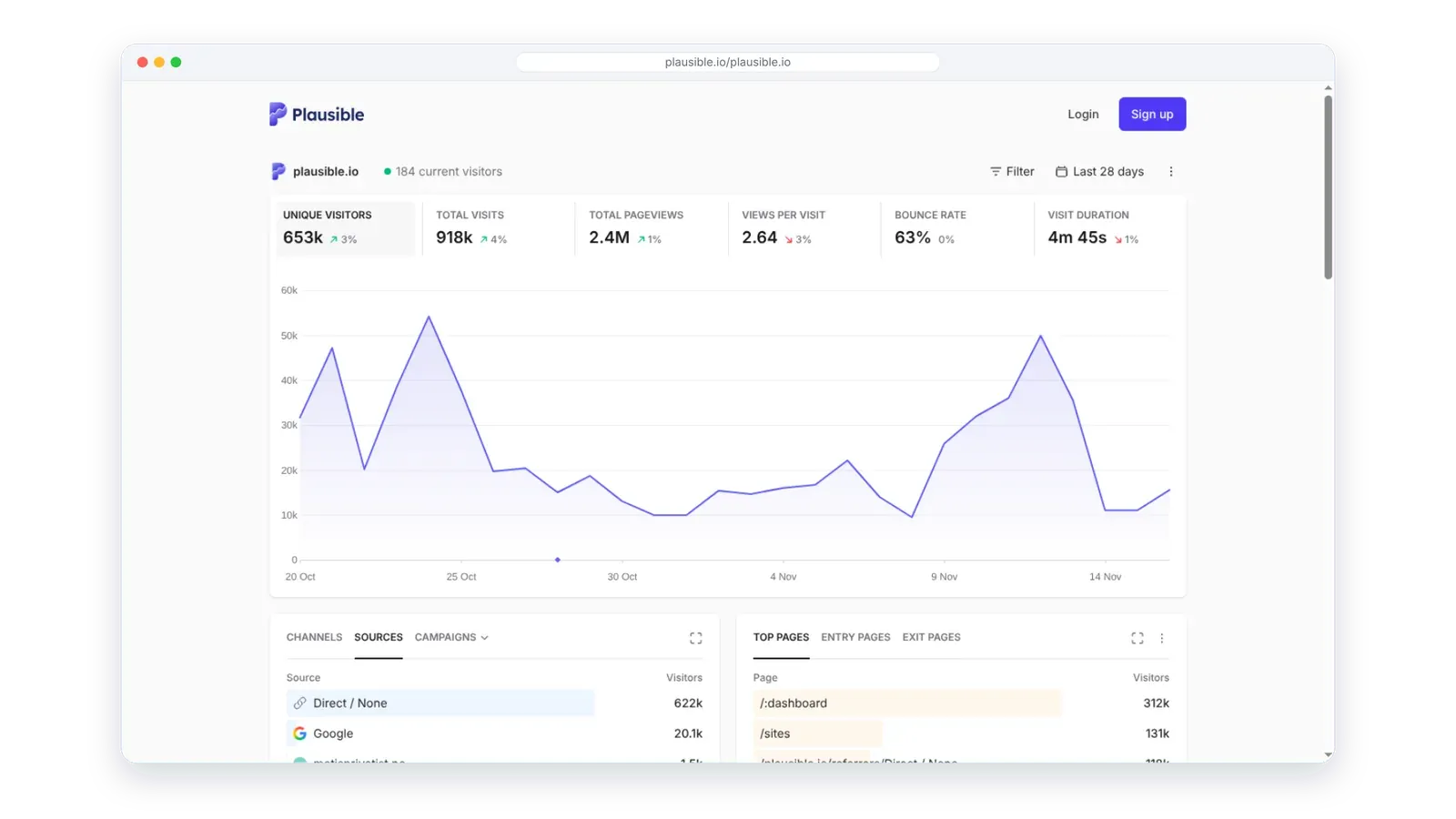
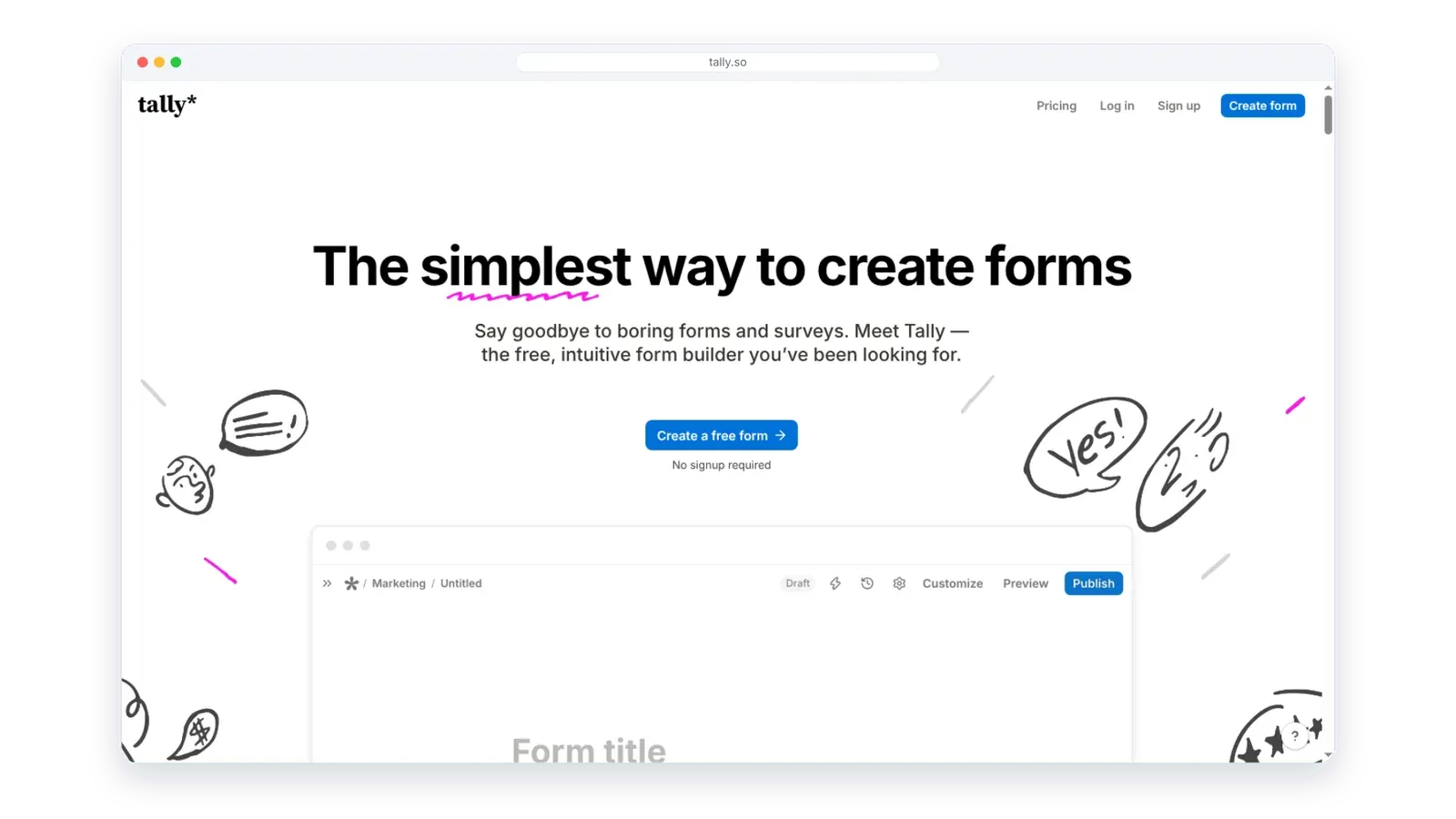
Whole products grew on this. Tally for forms, Plausible Analytics for privacy-friendly website stats and Gleap for customer support are all European tools that keep data in the EU. For European customers, that's often a big reason to pick them. And US users rarely care where their data sits, so EU hosting costs you nothing with them. It's an easy win, and an easy one to implement. In Supabase, for example, it comes down to picking an EU region like Frankfurt when you create your project. If your market cares about compliance, "your data never leaves the EU" can sell harder than any feature.
17. "Vibe coding is a security risk" is a weak argument in 2027
A lot of people dismiss AI-built software as a security liability. That was fairer two years ago. Today's models catch injection bugs, leaked keys and missing auth checks that plenty of human developers miss, and they get better with every release. And many of the loudest critics burn through thousands of dollars' worth of Claude tokens themselves. They're vibe coding too, they just call it something else.
It's the "em dash objection" revisited, but applied to code. At some point people decided an em dash proves a text was written by ChatGPT, and started dismissing whole articles over a punctuation mark writers have used for centuries. It's a shortcut that lets you judge where something came from without reading it. "It was vibe coded" works the same way. Neither tells you whether the work is any good. Code is secure or it isn't, whoever or whatever wrote it, and the only way to know is to check.
That doesn't mean you can skip the basics. Ask the model to review its own code for security issues, keep secrets out of the client, turn on your database's row-level security, and test every login and payment flow yourself. Do that, and "it was vibe coded" stops being a serious objection.
18. Pair software with something physical
Software alone gets easier to copy every month. Atoms don't. One of the most durable business ideas for 2027 and beyond is a physical product with software at its core.
- Lumenate: light-meditation sessions delivered through the Nova mask, which the app controls over Bluetooth.
- Oura and Whoop: a ring or a strap does the sensing, and the subscription app turns the data into sleep and health insights.
- DBC1: business cards for enterprise, a company I work with.
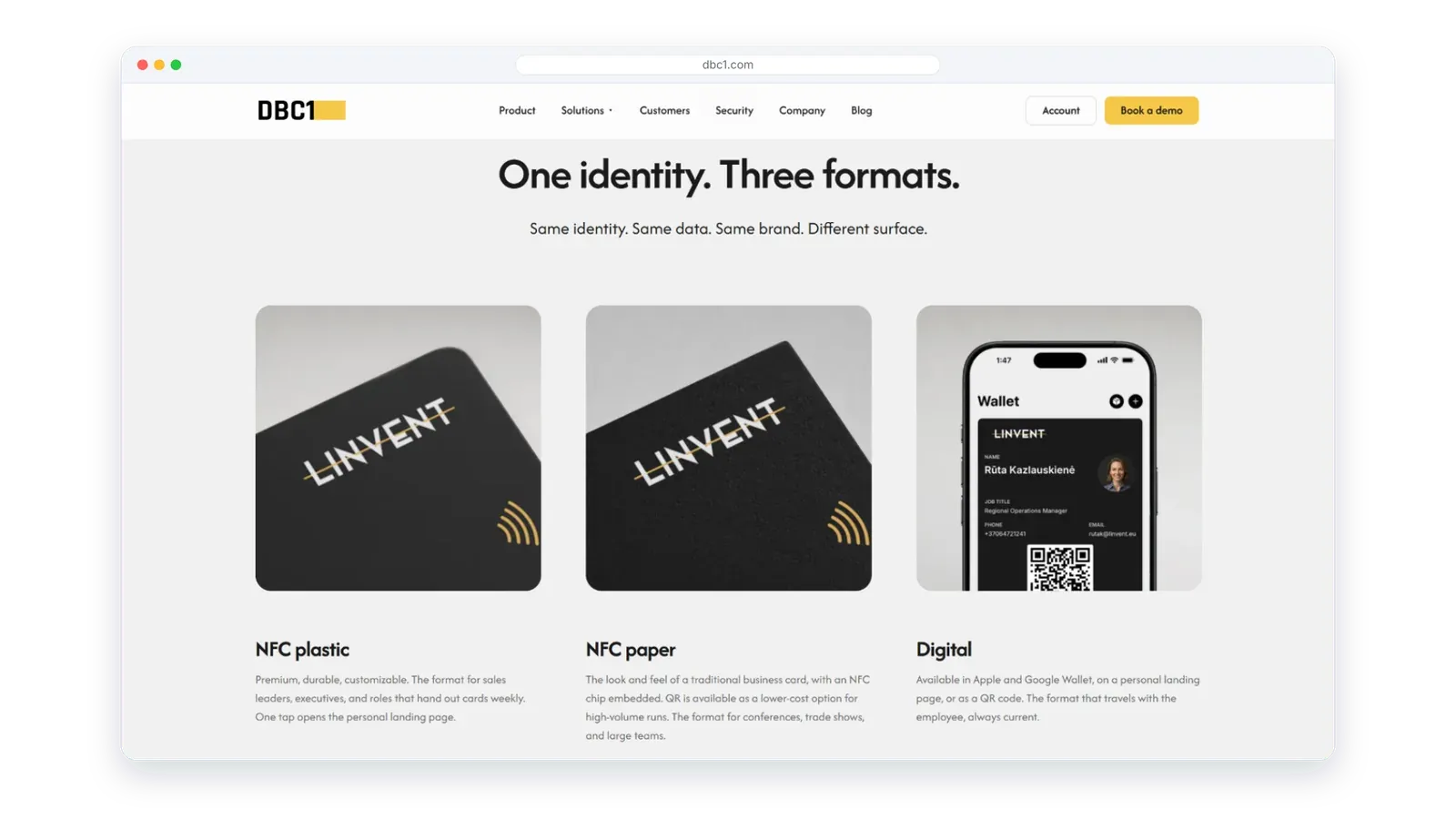
DBC1 is a good example of how far this goes. It gives a company one place to issue, brand and deactivate every business card its people carry, in three formats: NFC plastic, NFC paper and digital cards in Apple and Google Wallet. Cards follow the org chart. When someone joins, their card exists. When their role changes, it updates. When they leave, it stops working. Every tap is tracked, and leads flow straight into the CRM.
Here's the point: the software part could be cloned in a few weeks. The rest can't. Printing cards in a company's brand, shipping them to every market it operates in within days, and restocking a sales team before a trade show is slow, physical, unglamorous work. No prompt does it for you. Logistics and convenience are the moat software alone can't build.
19. Write copy that says what your product is
AI changed how people find products, and that changes how you should write about them. "Enjoy Coca-Cola", Gillette's "The best a man can get", Nike's "Just do it", L'Oréal's "Because you're worth it", "Red Bull gives you wings": these taglines were made for TV in the 1980s and 90s. They work because you already know the product, and because billions in ad spend taught you what the logo stands for.
Nobody types "the best a man can get" into Claude. People ask for concrete things: "a no-code theme builder for Ghost", "a Chrome extension that frees up Google Photos storage". The assistant matches that question to products that describe themselves in those words. An emotional tagline gives it nothing to match.
So unless you're an established lifestyle brand, say bluntly what your product is, in the words your buyer would type.
Here's what the classics would sound like if those brands had to be found by an assistant today:
| Brand | TV-era slogan | AI-friendly version |
|---|---|---|
| Coca-Cola | Enjoy Coca-Cola | Carbonated cola soft drink in cans and bottles |
| Gillette | The best a man can get | Multi-blade razors and replacement cartridges for men |
| Nike | Just do it | Running shoes, trainers and sportswear |
| L'Oréal | Because you're worth it | Hair colour, haircare and skincare from the drugstore |
| Red Bull | Red Bull gives you wings | Caffeinated energy drink with taurine |
| KitKat | Have a break, have a KitKat | Chocolate-covered wafer bar |
| Apple | Think different | Mac laptops and desktops for creative work |
The right-hand column reads like nothing. That's the point: it's exactly what a buyer types, and exactly what a model can repeat. Those brands can afford the left column. You can't. "No-code visual theme builder for Ghost" will get Ectobuilder recommended. "Unleash your creativity" won't.
Put that sentence in your headline, page title, meta description and store listing (it's the same quotable sentence from lesson 12). Save the clever line for second place, once people know what you sell. Humans benefit too: a visitor who gets your product in five seconds stays; one who has to decode a slogan leaves.
None of this is new, by the way. Steve Krug made the same case for web design in Don't Make Me Think: every second a visitor spends working out what something is or does is a second they might leave. AI just raised the stakes. Now the reader who can't work out what you sell isn't only a person skimming your homepage. It's the model deciding whether to recommend you.
20. Focus beats a portfolio
This is the lesson I learned the hard way. Ten apps under $1k MRR isn't ten experiments. It's ten support inboxes, ten codebases to keep alive through platform changes, and ten products to market with the same limited hours.
Building got cheap, so it's tempting to keep shipping. But maintenance and marketing didn't get cheaper. Three apps I'd pushed properly would probably have earned more than ten I launched and left. Ship fast to test, then cut hard and double down on what works.
The short version
- If an AI assistant can do it in one prompt, don't charge a subscription for it.
- Own something hard to copy: data, distribution or deep niche knowledge.
- Fewer features, better executed, for non-technical people.
- Charge monthly only for monthly value. Otherwise, sell once.
- Spend more time marketing than building.
- Make sure AI assistants recommend you, and let agents use you.
- Say what your product is, in the words your buyer would type.
- Ship fewer apps, and push the ones that work.
I'm still under $1k MRR. But I'm building differently now, and I'll report back on how it goes.
Cover photo by Jakub Żerdzicki on Unsplash.
Written by
Builder, product marketer and AI enthusiast. I ship my own apps, like Sift (siftphotos.pro), Penlo (penlo.app), Ectobuilder (ectobuilder.com) and Cubbie (cubbie.pro), and write about building and marketing them with AI.